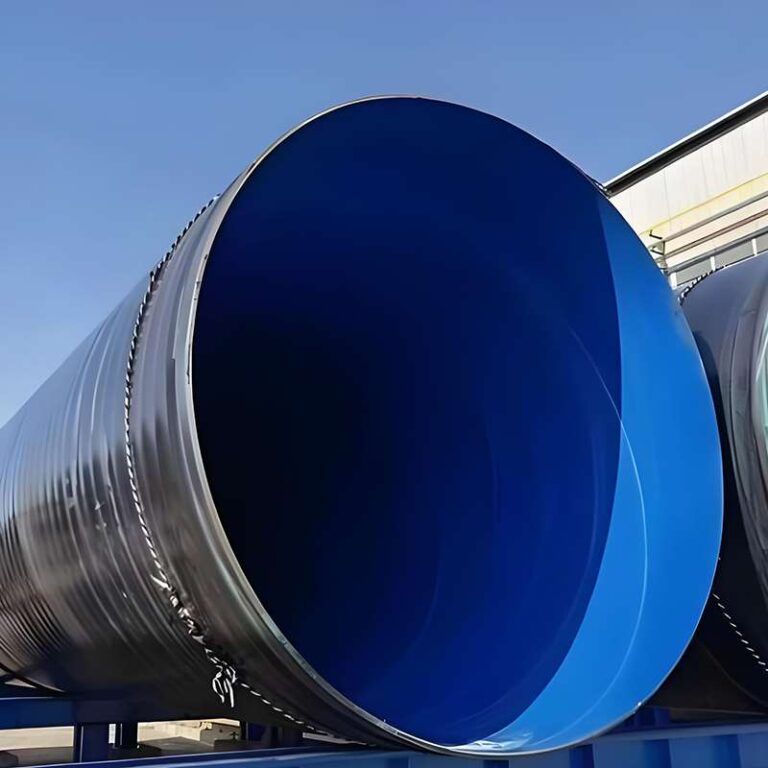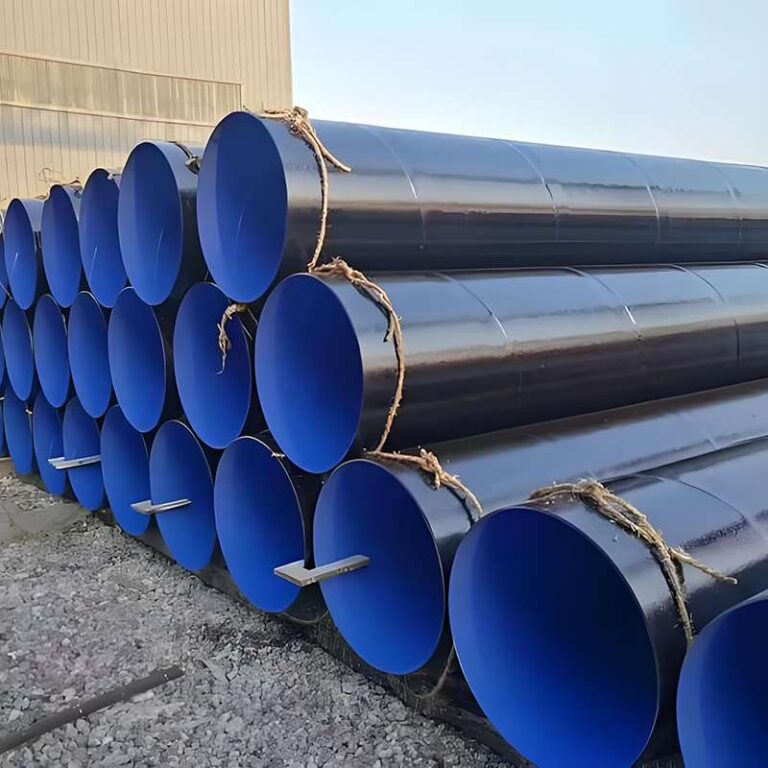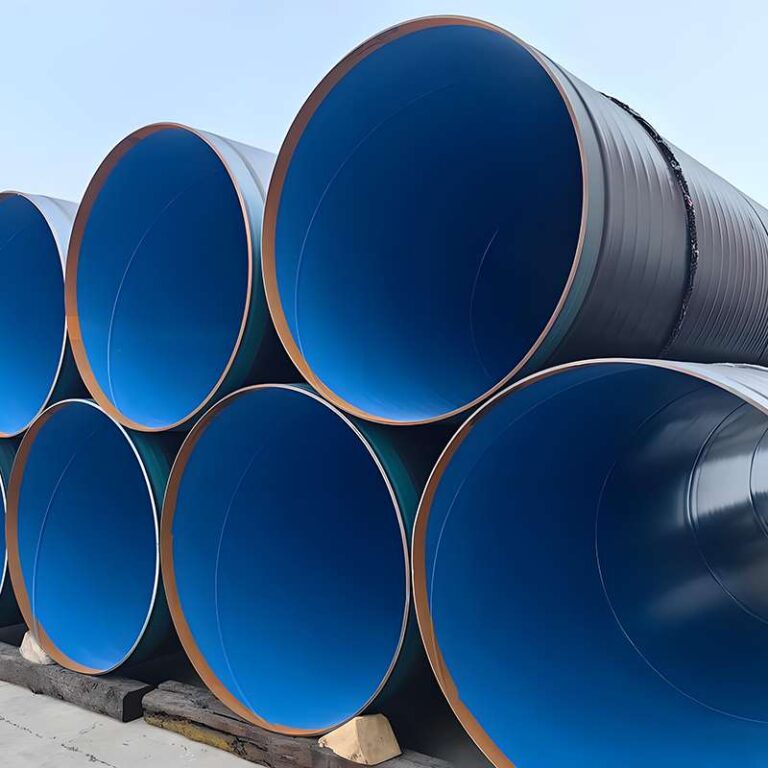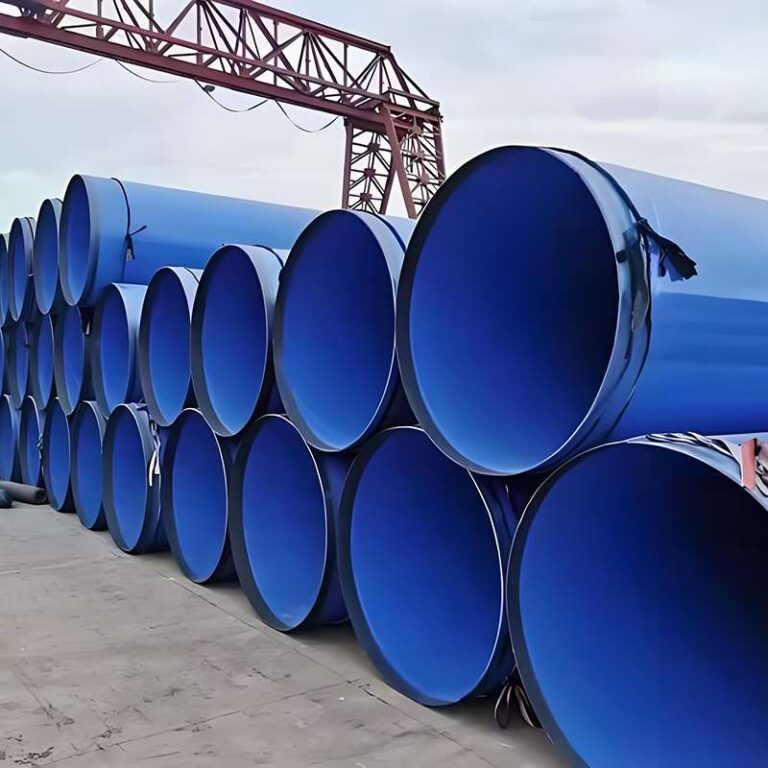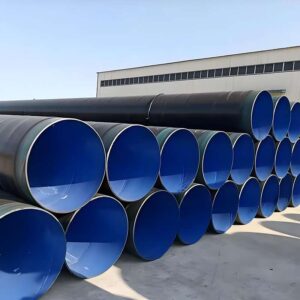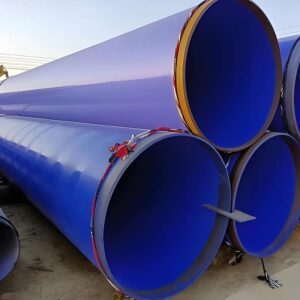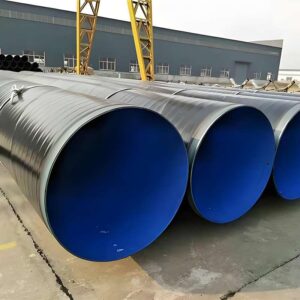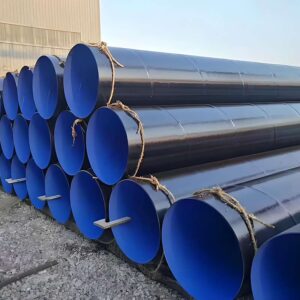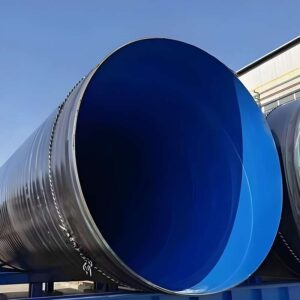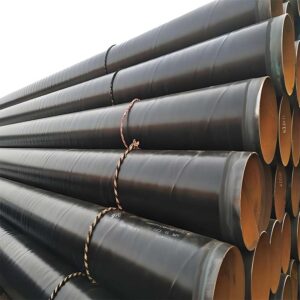
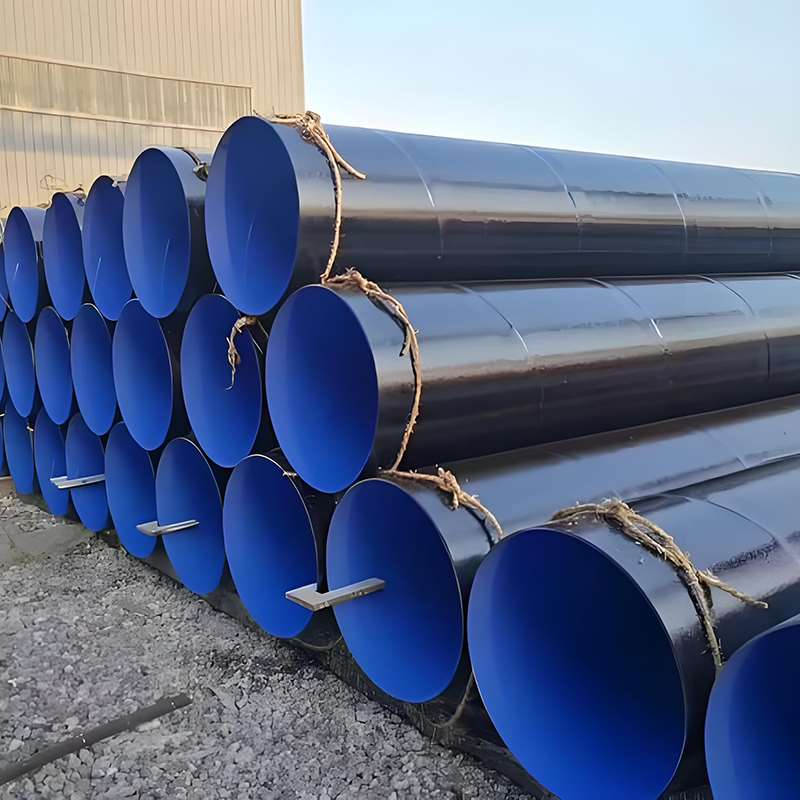
I. Characteristics of Carbon Steel Substrate (From an Engineering Application Perspective)
In large diameter coated spiral steel pipes, carbon steel is one of the most commonly used base materials. Its value lies not only in its chemical composition, but more importantly in its structural strength, manufacturing adaptability, and cost efficiency.
1. Excellent Structural Strength for Pressure-Bearing Applications
Carbon steel offers high tensile strength and strong pressure-bearing capacity, fully meeting the requirements of water transmission, oil transportation, and industrial pipeline systems.
In long-distance pipeline projects, carbon steel spiral steel pipes maintain stable structural performance, effectively reduce deformation risks, and are suitable for medium to high-pressure operating environments.
2. Well-Suited for Large Diameter and Long-Distance Pipeline Systems
Compared with certain higher-grade materials, carbon steel is more easily formed into spiral-welded structures, making it particularly suitable for:
- Large diameter pipelines (medium to large size range)
- Long-distance transmission pipelines
- Municipal and energy infrastructure projects
This strong manufacturing adaptability makes it a mainstream choice in large-scale pipeline network construction.
3. Cost-Effective and Ideal for Project Budget Optimization
Carbon steel is widely available and benefits from mature processing technologies, which ensures a strong cost advantage while maintaining reliable performance.
In large-scale engineering projects, this balance between performance and cost is particularly important, as it effectively reduces the overall investment in pipeline systems.
II. Carbon Steel Corrosion Issues and Corrosion Protection Solutions
In the practical application of carbon steel spiral welded pipes, different engineering environments can lead to various types of corrosion issues. Therefore, selecting the appropriate corrosion protection solution is key to ensuring the long-term, stable operation of the pipeline.
1. Buried Soil Environments (Underground Pipelines)
- Common Applications:
Urban water supply, oil transmission pipelines, long-distance underground pipelines - Common Corrosion Issues:
Electrochemical corrosion caused by soil moisture and oxygen
Accelerated rusting in saline-alkali soil
Rapid localized corrosion following damage to the protective coating - Recommended Corrosion Protection Solution:
3PE-coated steel pipes - Description:
The 3PE structure effectively isolates moisture, oxygen, and soil corrosion media, making it the most commonly used corrosion protection method for long-distance buried pipelines.
2. Coastal and Marine Environments
- Common Applications:
Port engineering, seawater conveyance, marine infrastructure - Common Corrosion Issues:
Rapid oxidation caused by high salt fog environments
Highly corrosive chloride ions
Accelerated aging of the anti-corrosion coating - Recommended Corrosion Protection Solution:
Reinforced 3PE anti-corrosion or high-grade FBE anti-corrosion systems - Description:
Marine environments are extremely corrosive and require higher-grade protection systems to enhance resistance to salt fog and durability.
3. Industrial and Chemical Environments
- Common Applications:
Chemical plant pipelines, industrial fluid transport systems - Common Corrosion Issues:
Chemical corrosion caused by acidic and alkaline media
High risk of internal wall corrosion
Coexistence of localized and uniform corrosion - Recommended Corrosion Protection Solution:
Steel pipes with FBE epoxy powder coating - Description:
FBE coatings offer excellent chemical stability and adhesion, making them suitable for highly corrosive industrial environments.
4. Long-Distance Water Transmission Projects
- Common Applications:
Urban water supply, water diversion projects, industrial circulating water systems - Common Corrosion Issues:
Slow corrosion caused by prolonged contact of inner walls with water
Oxidation reactions caused by dissolved oxygen in water
Decreased efficiency after long-term operation - Recommended Corrosion Protection Solution:
Combined internal and external corrosion protection system (FBE or 3PE) - Description:
Dual internal and external protection reduces the risk of internal corrosion, improves transmission efficiency, and extends service life.
5. General Municipal and Infrastructure Projects
- Common Applications:
Municipal drainage, general conveyance networks - Common Corrosion Issues:
Corrosion in moderately humid environments
Surface rust caused by prolonged exposure - Recommended Corrosion Protection Solution:
Steel pipes with epoxy-coal tar anti-corrosion coating - Description:
Suitable for moderately corrosive environments, offering high cost-effectiveness and ideal for budget-constrained projects.
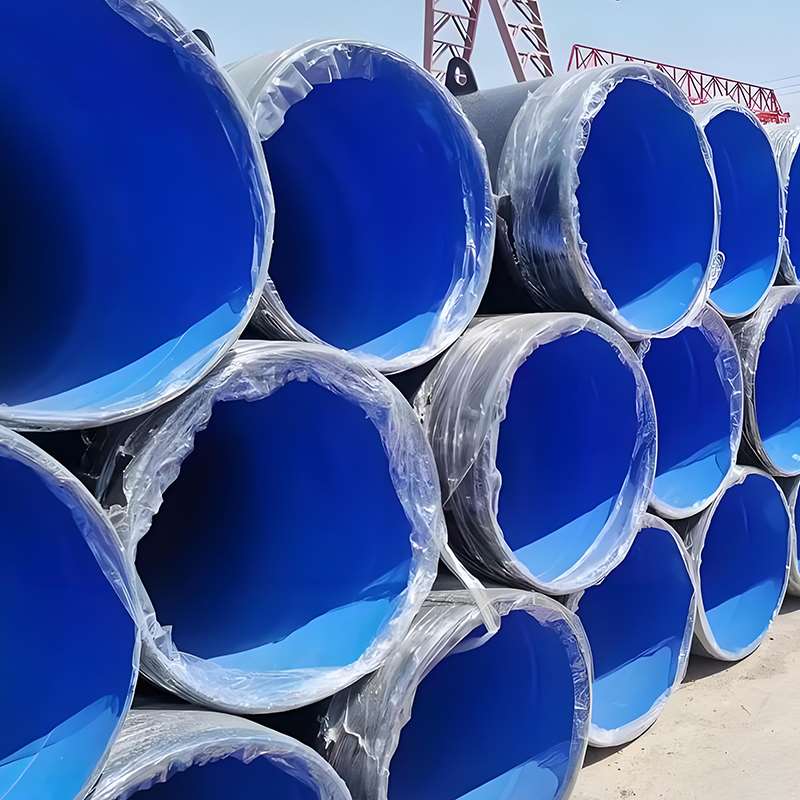
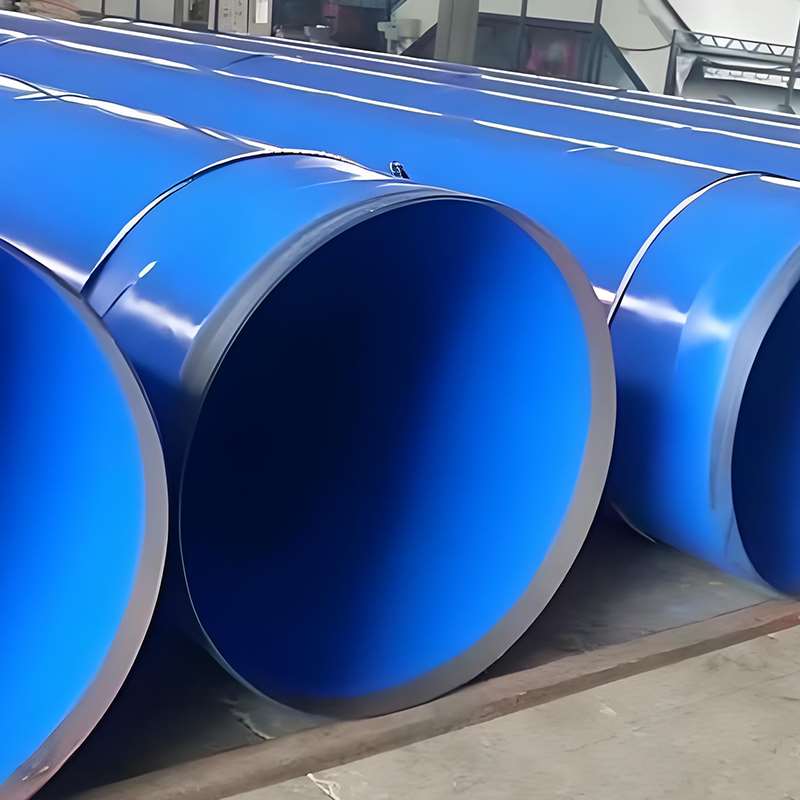
III. Balancing Cost and Durability
In the procurement of carbon steel spiral welded pipes for engineering projects, price is often the most obvious consideration. However, what truly impacts a project’s long-term costs is not the unit price, but rather the pipe’s overall service life and maintenance costs.
If one opts solely for low-cost pipes with no corrosion protection or only low-grade protection, the initial investment may be lower, but actual operation may require more frequent maintenance—such as corrosion repairs, partial replacements, or even pipeline shutdowns—thereby increasing the overall project cost.
Conversely, carbon steel spiral welded pipes with anti-corrosion coatings such as 3PE or FBE, while having a relatively higher initial cost, can significantly reduce corrosion risks, minimize maintenance frequency, and extend the pipeline’s service life, making them more cost-effective in the long run.
1. The Importance of Life Cycle Cost
In large-scale water, oil, and industrial pipeline projects, procurement decisions typically focus not only on material costs but also on evaluating the total life cycle cost (LCC), which includes:
- Initial procurement costs
- Installation and construction costs
- Maintenance and repair costs
- Replacement and shutdown costs
In many engineering projects, carbon steel spiral welded pipes with excellent anti-corrosion performance can often significantly reduce total costs over the long term.
2. Corrosion Protection Is Key to Reducing Long-Term Costs
Carbon steel inherently possesses good strength and workability, but corrosion issues directly impact its service life. Therefore, the value of a corrosion protection system lies not merely in “protecting the steel pipe,” but more importantly in:
- Extending service life
- Reducing maintenance frequency
- Lowering overall operating costs
3. How to Achieve a Balance Between Cost and Durability?
- Low-corrosion environments → Choose an economical anti-corrosion solution
- Moderate-corrosion environments → Choose a standard anti-corrosion system
- High-corrosion environments → Choose a reinforced anti-corrosion system
The key is not “the cheapest,” but “the most cost-effective over the life cycle.”
IV. Mechanisms for Extending Service Life
The service life of carbon steel spiral welded pipes is not fixed but is determined by a combination of the material itself, the corrosion protection system, construction quality, and the operating environment. In engineering practice, the overall service life of the pipeline can be significantly extended through proper protective design.
1. Corrosion Control Is the Key Factor in Extending Service Life
- Among all influencing factors, corrosion is the primary cause of steel pipe failure. Whether in buried, marine, or industrial environments, moisture, oxygen, and chemicals gradually erode the surface of steel pipes.
- Therefore, controlling the corrosion rate is a key prerequisite for extending service life.
2. Anti-corrosion Coatings Form a Long-Term Protective Barrier
Modern carbon steel spiral welded pipes typically achieve extended service life through external anti-corrosion coating systems, such as 3PE or FBE coatings.
The functions of these anti-corrosion layers are:
- To isolate moisture and oxygen
- Preventing corrosive media from contacting the steel
- Reducing the rate of electrochemical reactions
Through this physical isolation mechanism, the corrosion process of steel pipes can be significantly slowed, thereby extending their overall service life.
3. Construction and Transportation Quality Also Affect Service Life
Even with high-grade anti-corrosion systems, damage to the protective coating during transportation or installation can create potential corrosion hazards later on.
Factors that contribute to this include:
- Impact during lifting
- Damage from dragging on the ground
- Failure to promptly apply anti-corrosion protection to weld joints
- Scratches to the coating during backfilling
Therefore, standardized construction practices and protective measures are also crucial components of service life management.
4. Correct Selection Determines Final Service Life
Different corrosion protection grades should be selected for different engineering environments:
- Buried long-distance pipelines → 3PE corrosion protection system
- Chemical and highly corrosive environments → FBE corrosion protection system
- General municipal engineering → Cost-effective corrosion protection solutions
Appropriate selection can avoid “over-engineering” or “insufficient protection,” achieving a balance between service life and cost.
V. Engineering Procurement FAQ
1. What types of projects are carbon steel coated spiral steel pipes mainly used for?
Carbon steel coated spiral steel pipes are primarily used in large diameter, long-distance transmission projects, especially where both structural strength and corrosion resistance are required.
Typical applications include:
- Long-distance oil and natural gas transmission pipelines
- Urban water supply and water diversion projects
- Industrial fluid transportation systems
- Energy and infrastructure development projects
In practical engineering use, they are commonly selected for pipeline systems that require a balance of high strength, cost efficiency, and long service life.
2. Why do carbon steel pipes need anti-corrosion protection?
Although carbon steel offers excellent mechanical strength, it is susceptible to corrosion in humid, soil, or chemically aggressive environments.
The main purposes of applying anti-corrosion coatings (such as 3PE or FBE) include:
- Isolating moisture, oxygen, and corrosive media
- Slowing down the corrosion rate of steel
- Reducing long-term maintenance and repair costs
- Significantly extending pipeline service life
Without proper anti-corrosion protection, carbon steel pipes are generally only suitable for short-term or low-demand applications.
3. What is the difference between 3PE and FBE coatings? How should they be selected?
The two coating systems are designed for different operating environments:
3PE Coating (Three-Layer Polyethylene System)
- Best suited for buried pipelines and long-distance transmission projects
- Provides excellent mechanical protection and soil corrosion resistance
FBE Coating (Fusion Bonded Epoxy)
- Suitable for chemical and highly corrosive industrial environments
- Offers superior adhesion and strong chemical resistance
Simple selection guideline:
- Buried pipelines / long-distance transmission → 3PE coating
- Chemical / highly corrosive environments → FBE coating
4. What is the typical service life of coated carbon steel spiral pipes?
The service life mainly depends on coating type, installation quality, and operating environment.
Under standard engineering conditions:
- The service life of coated carbon steel spiral steel pipes is typically 20–50 years
Key factors affecting service life include:
- Coating grade and thickness
- Quality of installation and construction
- Damage to the coating during handling or installation
- Severity of the operating environment
With proper material selection and correct installation practices, the service life can be significantly extended.
5. Which anti-corrosion system is recommended for buried pipelines?
For buried pipeline projects, the 3PE anti-corrosion system is the most commonly used and highly recommended solution.
Its advantages include:
- Excellent resistance to soil moisture and corrosive media
- Strong impact resistance, suitable for backfilling operations
- Ideal for long-distance transmission pipelines
- Reliable performance in highly corrosive soils (such as saline-alkali soil and high-humidity regions)
For highly aggressive environments, an enhanced or heavy-duty 3PE coating system is typically recommended.
6. Can coated steel pipes be used in marine or port engineering projects?
Yes, but the coating system must be selected according to the environmental severity.
In marine and coastal environments, the main corrosive factors include:
- High salt spray exposure
- High humidity levels
- Strong chloride ion corrosion
Recommended solutions include:
- High-grade 3PE coated steel pipes
- Customized heavy-duty anti-corrosion systems based on project requirements
The key requirement is long-term resistance to salt spray and corrosion. Without adequate protection, the service life of the pipeline will be significantly reduced.