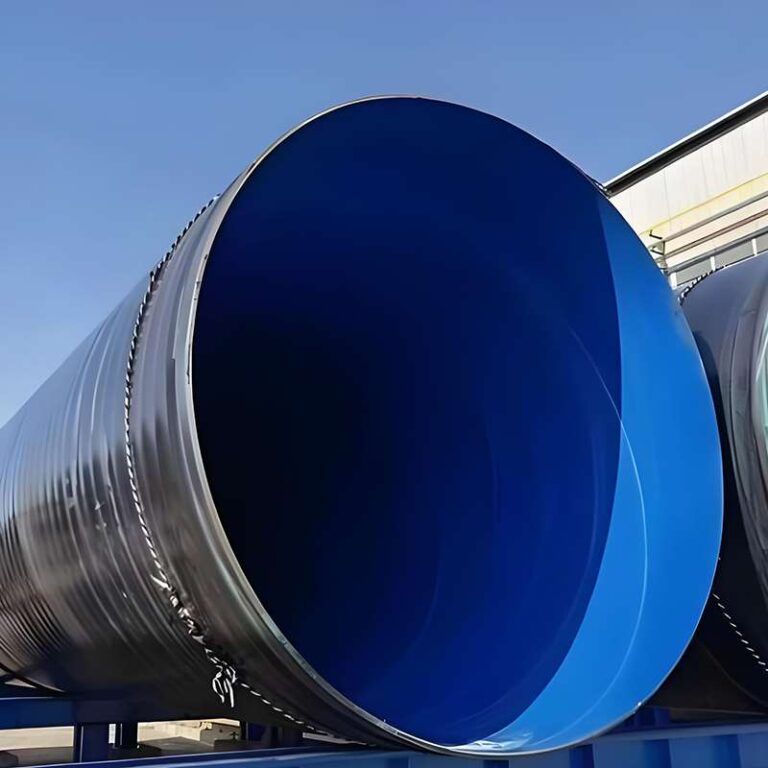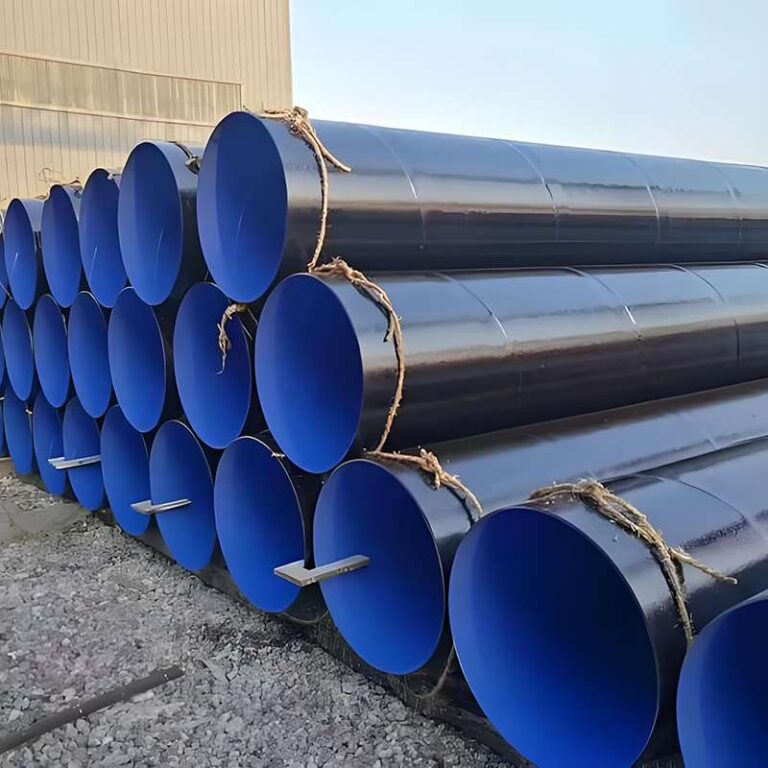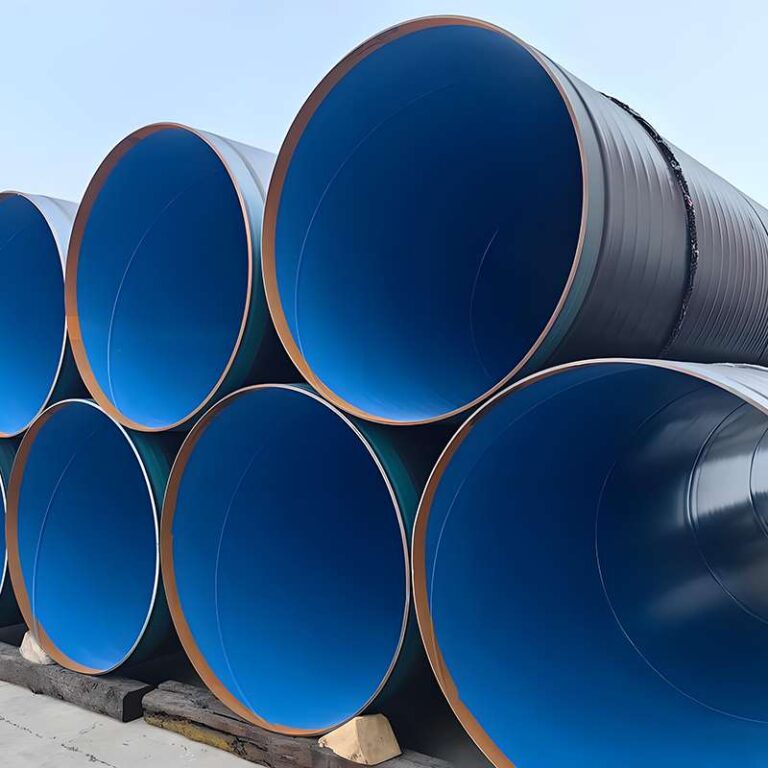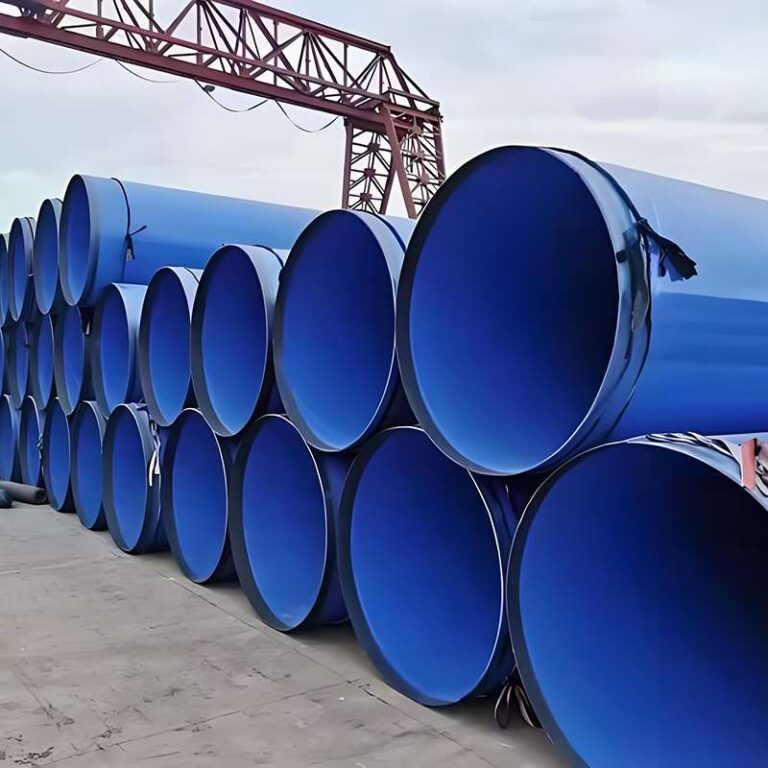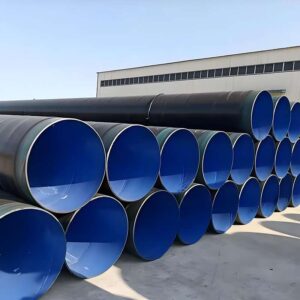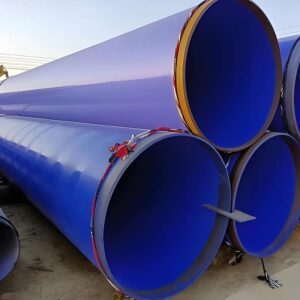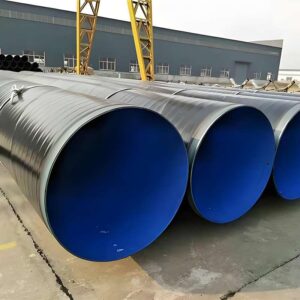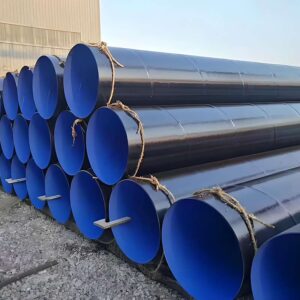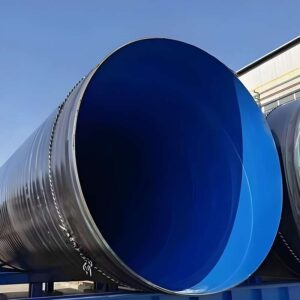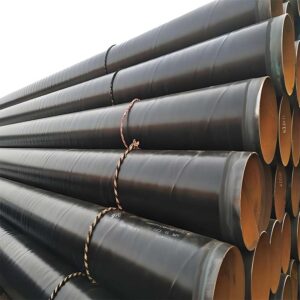
I. Corrosion Environment of Oil Pipelines: Why Long-Term Failure Risk Must Be Addressed
3PE coated steel pipes are widely used in oil and gas transmission systems. Their core function is not to “increase strength,” but to address a far more critical challenge: long-term corrosion failure control in buried and aggressive service environments.
Oil pipelines typically pass through diverse geological conditions and remain buried underground or installed in complex environments for decades. Under these conditions, pipelines are not exposed to a single corrosion factor, but to multiple continuously interacting degradation mechanisms.
1. Chemical Corrosion: Continuous Attack from Soil and Ground Media
The underground environment is not static; it is a continuously reactive chemical system:
- Moisture in the soil forms an electrolyte environment
- Salts, acids, and alkaline substances accelerate electrochemical reactions
- Long-term groundwater infiltration increases corrosion rates
As a result, the steel surface undergoes continuous oxidation and gradual wall thickness loss over time.
2. Electrochemical and Microbiologically Influenced Corrosion (MIC): Invisible but Highly Dangerous Damage
In many oil and gas projects, the most severe corrosion is often invisible during early stages:
- Microbiologically Influenced Corrosion (MIC) develops continuously in moist soils
- Stray current corrosion is triggered by nearby railways or power systems
- Local potential differences lead to rapid pitting corrosion development
These mechanisms share a key characteristic:
They show almost no obvious symptoms in the early stage, but once initiated, they can propagate rapidly and uncontrollably.
3. Mechanical and Construction Damage: The Hidden Cause of Coating Failure
Many pipeline failures are not caused by operational conditions, but by damage introduced during construction and installation:
- Backfilling with rocks or sharp materials causing coating scratches
- Impact damage during lifting, loading, and transportation
- External stress from ground settlement and soil movement
- Long-term soil pressure leading to coating cracking
Conclusion:
A corrosion protection system must not only resist corrosion, but also withstand mechanical and installation-related damage.
4. Environmental Aging: Performance Degradation Over Long-Term Operation
Even in the absence of visible damage, coating materials will degrade over time:
- Thermal cycling leads to material fatigue
- UV exposure or thermal aging (especially in above-ground or shallow-buried sections)
- Gradual decline in polymer performance over time
If the protective system is unstable, the following defects may occur:
- Blistering
- Delamination
- Microcrack propagation
Core Conclusion
Pipeline failures are rarely caused by insufficient steel strength. Instead, they are the result of:
the combined effect of external corrosion environments, mechanical damage, and long-term material aging leading to coating system failure.
Therefore, a pipeline protection system must be capable of resisting:
- Chemical corrosion
- Electrochemical corrosion
- Mechanical damage
- Long-term aging
as an integrated and multi-layer defense system.
Engineering Significance
This is precisely why 3PE coated steel pipes are widely used in long-distance oil and gas transmission projects.
Their value is not simply “anti-rust protection,” but:
maintaining long-term structural stability and coating integrity in complex buried environments throughout the entire service life of the pipeline.
II. 3PE Anti-Corrosion System: How the Three-Layer Structure Works Together to Protect Steel Pipes
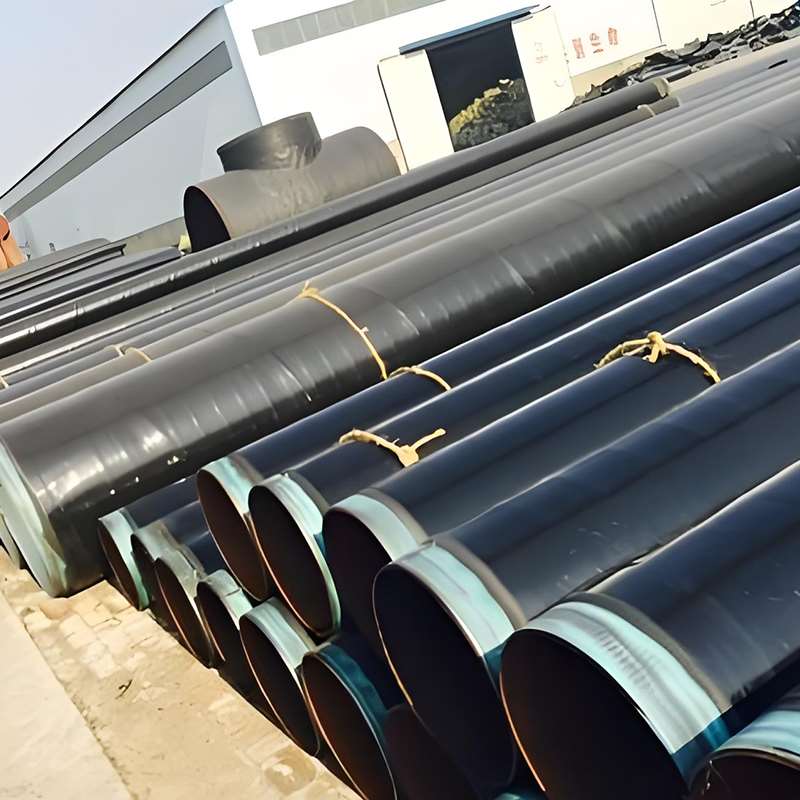
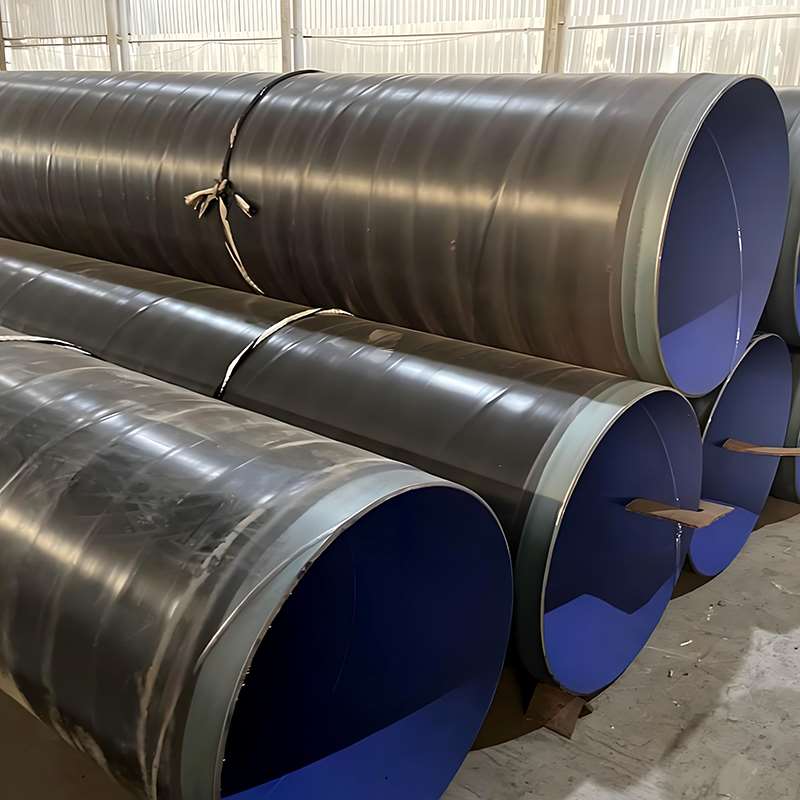
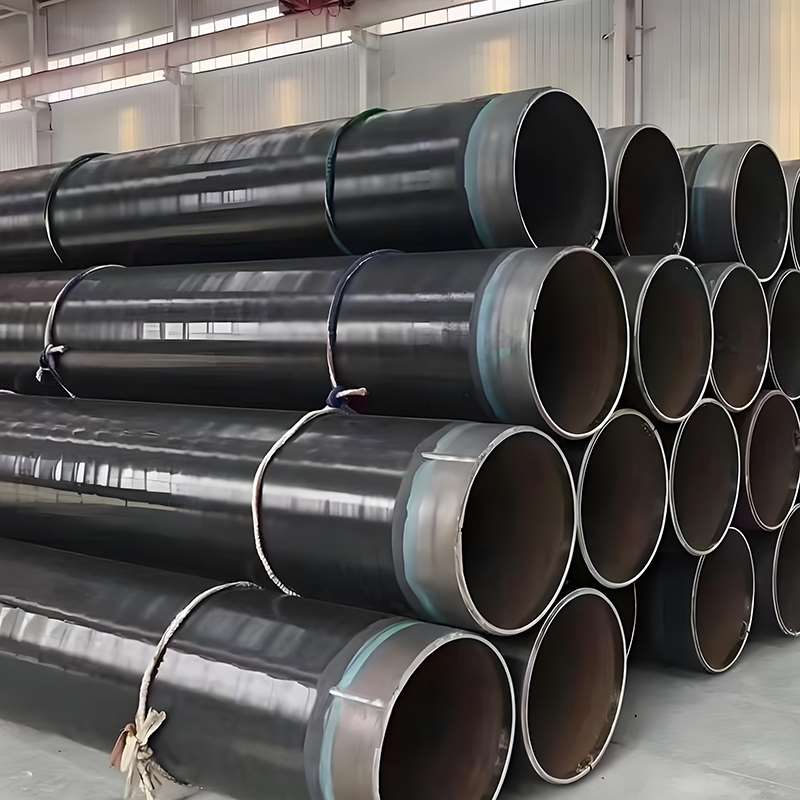
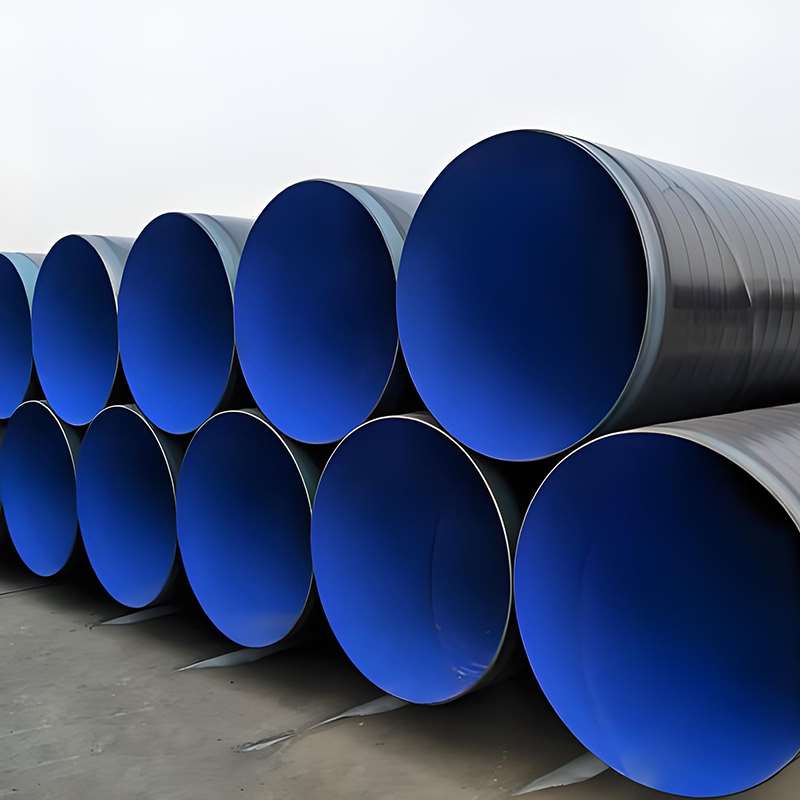
The core advantage of 3PE coated steel pipe does not lie in a single material property, but in the synergistic performance of a three-layer composite structure, which collectively delivers integrated protection against corrosion, mechanical impact, and long-term degradation.
1. First Layer: Fusion Bonded Epoxy (FBE) — The Primary Anti-Corrosion Barrier
This inner layer is directly applied onto the steel surface and serves as the foundation of the entire coating system.
Its function can be understood as:
- Acting like a “primer layer” that firmly bonds to the steel substrate
- Preventing direct contact between steel and corrosive elements such as moisture, oxygen, and electrolytes
- Forming a highly stable and continuous anti-corrosion film on the pipe surface
More importantly, the FBE layer provides extremely strong adhesion to the steel substrate, which is critical for long-term corrosion resistance and coating durability.
2. Second Layer: Adhesive Layer (AD) — The Bonding Bridge Between Two Materials
This layer is not primarily responsible for corrosion resistance, but for structural integration.
Its role can be understood as:
- Strongly bonding the inner FBE layer with the outer polyethylene (PE) layer
- Acting as a transition medium between dissimilar materials
- Absorbing thermal expansion and contraction caused by temperature fluctuations
- Preventing delamination, void formation, or interlayer separation during long-term service
This layer ensures that the entire coating system behaves as a unified structure rather than three independent layers.
3. Third Layer: Polyethylene Outer Layer (PE) — The External Protective Armor
This is the outermost and most visible layer of the system.
Its primary functions include:
- Resisting mechanical damage such as impact, abrasion, and rock pressure during construction
- Preventing direct exposure of the pipe to groundwater and soil corrosion
- Providing long-term mechanical protection in buried and harsh environments
In engineering terms, this layer can be regarded as the “protective armor” of the steel pipe, ensuring the coating system remains intact during transportation, installation, and long-term underground service.
III. High-Temperature and High-Pressure Adaptability: Why It Remains Reliable Under Real Operating Conditions
In oil and gas transmission systems, long-term pipeline safety is determined not only by the mechanical strength of the steel pipe itself, but more importantly by the ability of the external corrosion protection system to maintain long-term stability under continuous service conditions.
For buried oil and gas pipelines, the coating system must withstand:
- Continuous high internal pressure operation
- Cyclic temperature fluctuations
- Soil stress and ground settlement
- Groundwater and corrosive media exposure
- Long-term buried aging conditions
1. High-Pressure Operating Conditions: Not Only the Steel Pipe Bears the Load, the Coating Must Remain Stable
Long-distance oil and gas pipelines typically operate under continuous high-pressure conditions over extended periods.
Although internal pressure is primarily borne by the steel pipe itself, pressure fluctuations, pipeline vibration, and geological stress can still impose long-term mechanical influence on the external coating system.
The advantages of the 3PE coating system include:
- The outer polyethylene (PE) layer provides excellent impact resistance and deformation tolerance
- The three-layer structure ensures high interlayer bonding strength
- Resistance to coating disbondment, cracking, and loss of adhesion during long-term operation
- Stable long-term external corrosion protection performance under dynamic service conditions
2. Temperature Variation Conditions: Reducing Coating Failure Risks Caused by Thermal Expansion and Contraction
In real pipeline operations, temperature fluctuations are common, including:
- Temperature variations of transported crude oil or natural gas
- Seasonal changes in surrounding soil temperature
- Thermal shock during pipeline start-up and shutdown cycles
- Day-night temperature differences in certain regions
If coating material stability is insufficient, long-term thermal cycling may lead to:
- Coating cracking
- Blistering and delamination
- Reduced adhesion strength
- Increased localized corrosion risk
The 3PE coating system, through the synergistic performance of the FBE primer, adhesive layer, and PE outer layer, maintains strong adhesion and flexibility within a defined temperature fluctuation range. This significantly reduces the risk of coating failure caused by thermal stress.
It is important to note:
Standard 3PE coating systems are typically designed for medium- and low-temperature buried pipeline applications.
For pipelines operating under long-term elevated temperatures (generally above 70°C–80°C), the industry more commonly adopts 3PP (Three-Layer Polypropylene) coating systems, which offer superior high-temperature resistance.
3. Long-Term Operational Stability: The Key Factor Determining Pipeline Service Life
For oil and gas transmission projects, the true determinant of service life is not short-term mechanical strength, but the long-term stability of the corrosion protection system over decades of operation.
The long-term advantages of 3PE coated steel pipe include:
- Strong resistance to soil-induced corrosion
- Excellent moisture resistance and environmental aging performance of the PE outer layer
- Stable coating structure with low risk of large-scale failure
- Reduced frequency of maintenance, excavation, and repair operations
As a result, 3PE coating systems are widely used in:
- Long-distance oil and gas transmission pipelines
- Highly corrosive buried environments
- National energy infrastructure projects
- Pipeline systems with stringent service life requirements
In practical engineering applications, the design service life of such systems is typically intended to exceed 20–30 years of stable operation.
IV. Oilfields and Long-Distance Pipeline Projects: How to Determine Whether 3PE Coated Steel Pipes Are Required
1. Oilfield Gathering Systems: Why Are They Considered High-Priority Corrosion Protection Areas?
Oilfield gathering pipelines typically operate in environments characterized by high corrosion risk, dispersed layouts, and difficult maintenance conditions, including:
- Transport media containing water, salts, and sulfur compounds
- Pipeline networks located in remote fields or complex terrains
- Extremely high maintenance costs in case of failure or shutdown
Basic selection principle:
If a pipeline failure would result in high repair costs and significant production downtime, then a 3PE corrosion protection system should be strongly considered.
2. Oil and Gas Long-Distance Transmission Pipelines: Why 3PE Is the Preferred Choice
Long-distance transmission pipelines are typically characterized by:
- Very long distances (tens to thousands of kilometers)
- Extended service life requirements (20–30+ years)
- Multi-terrain routes (mountains, deserts, farmland, etc.)
Selection logic:
If the project is part of a national energy backbone system or trunk line, or:
- Pipeline shutdown would cause major economic losses
- Frequent excavation and maintenance are not feasible during service life
Then 3PE coating is considered a standard configuration for such projects.
3. Highly Corrosive Environments: Key Conditions Where 3PE Becomes Essential
Typical high-corrosion environments include:
- High salinity or alkaline soil regions
- Areas with high groundwater levels
- Coastal and offshore environments
- Industrial pollution zones (e.g., chemical plants, refineries, petrochemical areas)
Evaluation principle:
If the surrounding soil or environment has continuous and aggressive corrosion activity, low-grade coating systems are not recommended.
4. Oil & Gas Stations and Auxiliary Systems: Often Overlooked but Equally Critical
Many projects focus primarily on trunk pipelines; however, auxiliary systems are equally important, including:
- Pump station inlet and outlet pipelines
- Metering station connecting pipelines
- Storage tank farm transfer pipelines
Although these sections are relatively short in distance, they often have:
- Higher failure frequency
- Significant operational impact during maintenance or repair
Therefore, 3PE coating is also widely applied here to ensure uniform corrosion protection standards and system integrity consistency across the entire pipeline network.
5. Simple Selection Guideline for 3PE Coated Steel Pipes
If you are unsure whether 3PE is required, the following rule can be used:
If two or more of the following conditions are met → 3PE coating is strongly recommended:
- Buried installation with no frequent maintenance access
- Design service life ≥ 20 years
- Medium to high corrosion environment
- Transport medium: oil, gas, or water-oil mixture
- High economic loss in case of pipeline shutdown
V. 3PE Coated Steel Pipe Standards
1. Pipe Body Standards
| Standard System | Standard Number | Standard Name | Application Scope | Description |
|---|---|---|---|---|
| API | API 5L | Specification for Line Pipe | Oil and gas transmission pipeline steel pipes | Basic pipe standard covering strength, chemical composition, and PSL1/PSL2 requirements |
| ISO | ISO 3183 | Petroleum and natural gas industries — Steel pipe for pipeline transportation systems | International pipeline steel standard | Equivalent international standard to API 5L |
| ASTM | ASTM A106 / A53 | Seamless and welded steel pipe | High-temperature / general-purpose transmission pipes | Industrial and partial fluid transportation systems |
2. Standards for 3PE anti-corrosion coating
| Standard System | Standard Number | Standard Name | Application Scope | Description |
|---|---|---|---|---|
| ISO | ISO 21809-1 | External coatings for buried or submerged pipelines | 3PE corrosion protection for buried and offshore pipelines | Core international standard for 3PE coating systems |
| ISO | ISO 21809-3 | Field joint coatings | Field joint (welded seam) corrosion protection | Standard for pipeline field joint coating systems |
| DIN | DIN 30670 | Polyethylene coatings for steel pipes | External PE anti-corrosion coating | Common European standard for 3PE coating systems |
| DIN | DIN 30678 | Polypropylene coatings | High-temperature corrosion protection systems | Alternative PP/PE coating system for elevated temperature applications |
| CSA | CSA Z245.21 | External polyethylene coating for pipes | North American oil and gas pipelines | Standard for coating performance and testing requirements |
| CSA | CSA Z245.20 | Fusion bonded epoxy coating | FBE primer layer standard | Requirements for the FBE base layer in 3PE systems |
| EN | EN 10289 | External organic coatings | European corrosion protection systems | Performance standard for organic coating systems |
VI. Testing Standards
| Test Category | Test Item | Standard / Method Reference | Technical Requirements | Function Description |
|---|---|---|---|---|
| Visual Inspection | Surface integrity | ISO 21809 / Project specification | No bubbles, cracks, pinholes, or holidays | Ensures coating continuity and installation quality |
| Thickness Test | Total coating thickness | ISO 21809-1 | As per design requirements (typically 2.5–4.0 mm) | Ensures long-term corrosion protection performance |
| Adhesion Test | Peel strength | DIN 30670 / ISO 21809 | Meets specified minimum peel strength | Prevents coating disbondment |
| Impact Test | Impact resistance | ISO 21809-1 | No cracking or coating delamination | Simulates mechanical impact during backfilling and construction |
| Cathodic Disbondment | Cathodic disbondment resistance | ISO 21809-3 | Disbondment radius within specified limits | Evaluates stability under cathodic protection conditions |
| Bending Performance | Cold bending / flexural test | ISO / ASTM relevant methods | No cracking or coating detachment | Ensures adaptability during pipe bending and deformation in construction |
| Holiday Detection | Spark testing | ISO 21809 | No electrical breakdown points | Detects pinholes and hidden coating defects |
| Thermal Aging Test | Aging resistance | ISO 21809 | No significant performance degradation | Simulates long-term service conditions |
| Compression Test | Dent / compression resistance | Project specification | No permanent surface damage | Simulates long-term soil pressure load |
| Chemical Resistance | Soil / water immersion test | ISO / project requirements | No significant performance deterioration | Ensures adaptability to different corrosive environments |
VII. Pipeline Safety Operation System: Why 3PE Pipelines Require an Integrated “Corrosion Protection + Monitoring + Management” Approach
1. Cathodic Protection System: Preventing “Invisible Electrochemical Corrosion”
Even with a 3PE coating system, micro-defects or aging-related weak points may still exist over long-term service.
The function of cathodic protection is to:
- Actively suppress electrochemical corrosion of the steel pipe
- Provide protective current at coating defect locations
- Prevent localized corrosion from developing into through-wall perforation
In essence, it serves as the second defensive barrier when the coating system is compromised.
2. Regular Potential Monitoring: Verifying Whether the Pipeline Is Still Protected
The primary purpose of potential measurement is not equipment inspection, but system status evaluation, including:
- Whether the cathodic protection system is operating effectively
- Whether the pipeline remains within the safe electrochemical potential range
- Whether any under-protected or high-risk areas exist along the pipeline
This ensures continuous verification of corrosion protection performance in real operating conditions.
3. Pipeline Integrity Management (PIM): Shifting from “Repair-Based” to “Preventive” Management
Pipeline Integrity Management (PIM) is not a single inspection activity, but a comprehensive management system that includes:
- Risk assessment (identifying high-risk pipeline sections)
- Operational data tracking and historical record analysis
- Failure prediction and early warning mechanisms
- Preventive maintenance planning and scheduling
This approach transforms pipeline maintenance from reactive repair to proactive risk control.
4. Internal and External Corrosion Monitoring: Tracking “Invisible Changes”
Pipeline corrosion often develops in areas that cannot be directly observed, requiring continuous monitoring of:
- Internal corrosion caused by transported media
- External corrosion caused by soil and groundwater environments
- Corrosion growth rate and localized degradation behavior
This enables early detection of degradation trends before structural damage occurs.
5. Intelligent Pigging Inspection: A Full “Health Check” for the Pipeline
Pigging (PIG) inspection enables in-line pipeline evaluation without interrupting operation.
It can be used to:
- Measure wall thickness variations along the pipeline
- Detect corrosion pits, cracks, or other structural defects
- Assess the overall integrity and health condition of the pipeline system
This technology provides a comprehensive diagnostic tool for long-distance pipeline safety management.
VIII. FAQ
1. Why are 3PE coated Spiral steel pipes used in oil and gas pipelines?
Oil and gas pipelines are typically buried underground for long periods and are exposed to corrosive factors such as soil moisture, salts, and stray electrical currents.
The 3PE coating system provides:
- Corrosion resistance
- Protection against mechanical impact and damage
- Extended service life
Therefore, it is widely used in long-distance oil and gas transmission pipelines.
2. What is the typical service life of 3PE coated steel pipes?
The general design service life is:
- 20–30 years or longer
However, the actual service life depends on:
- Construction and installation quality
- Soil corrosivity conditions
- Integrity of the cathodic protection system
- Presence of mechanical damage during operation
3. Can 3PE coated steel pipes be used for high-temperature pipelines?
Yes, but with temperature limitations:
- Generally suitable for service temperatures ≤ 60–80°C
For long-term high-temperature operation (above this range), the following systems are typically recommended:
- 3PP (Three-Layer Polypropylene) coating system
- High-temperature FBE (Fusion Bonded Epoxy) coating systems
4. What is the difference between 3PE and FBE coatings?
In simple terms:
- FBE (Fusion Bonded Epoxy): Single-layer coating with excellent corrosion resistance but moderate impact resistance
- 3PE (Three-Layer Polyethylene): Multi-layer system with superior impact resistance and better suitability for buried pipeline environments
For long-distance oil and gas pipelines, 3PE is generally the preferred option.
5. Why do 3PE coated pipelines still require cathodic protection?
Even high-performance coatings may have:
- Mechanical scratches
- Field joint coating defects
- Long-term aging effects
The role of cathodic protection is to:
- Prevent corrosion from expanding at coating defect points
- Provide electrochemical protection to exposed steel areas
It acts as a secondary safety barrier for pipeline integrity.
6. Which projects are suitable for 3PE coated steel pipes?
3PE coated steel pipes are suitable for:
- Long-distance buried pipelines
- Oil and gas transmission projects
- Highly corrosive soil environments
- Projects where maintenance access is difficult
- Pipeline systems designed for service life of 20+ years
Simple rule of thumb:
If maintenance or repair costs are high, 3PE coating is strongly recommended.