I. Product Overview
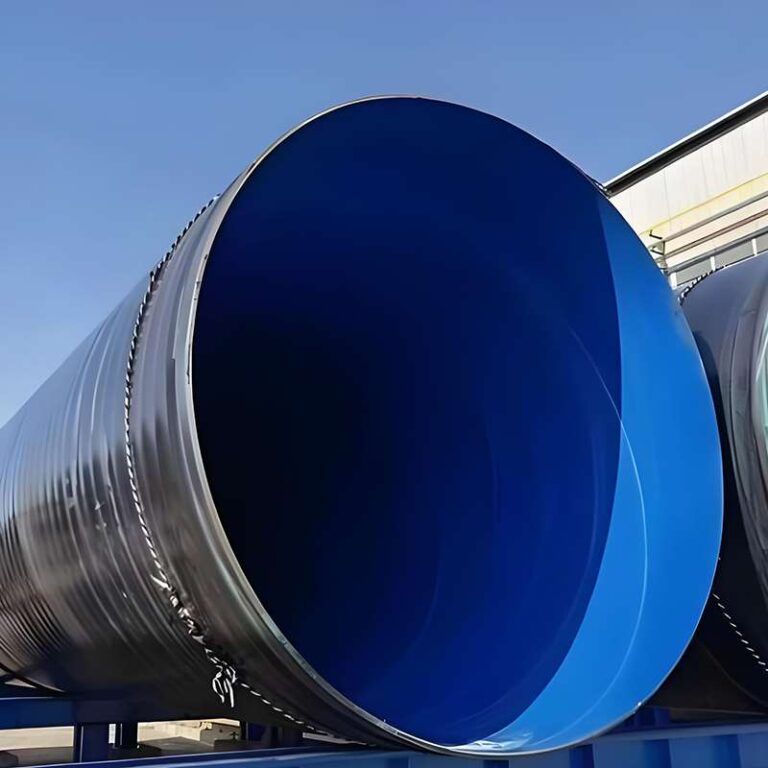
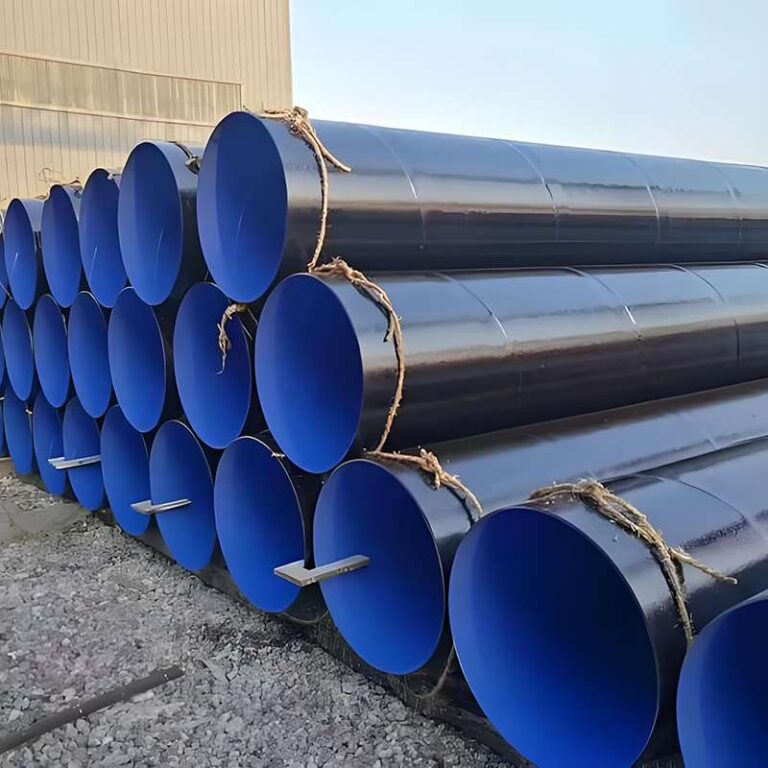
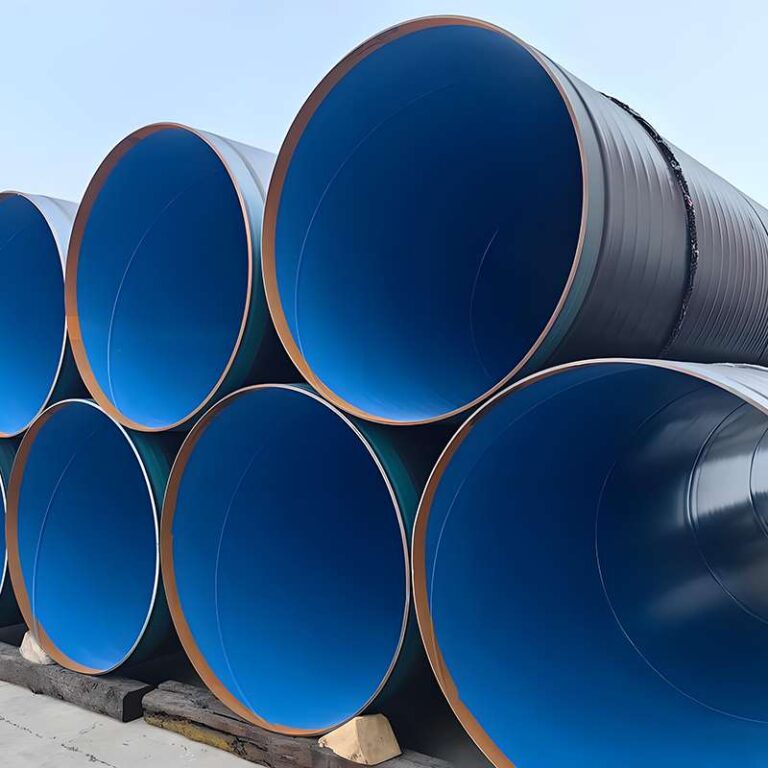
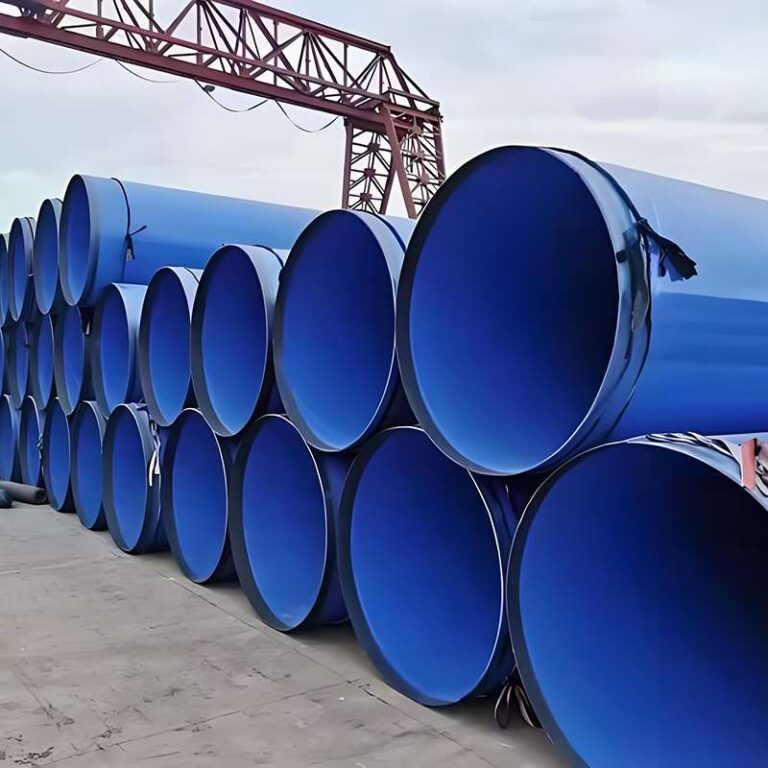
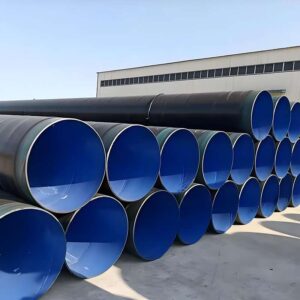
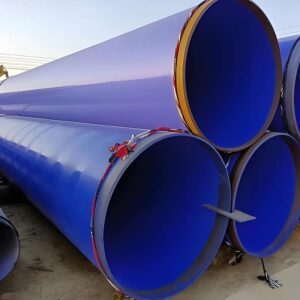
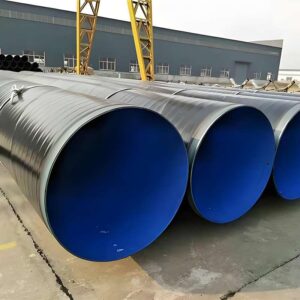
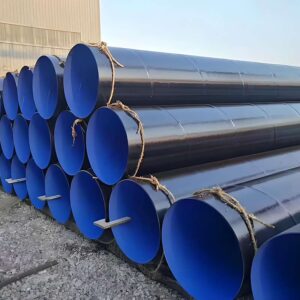
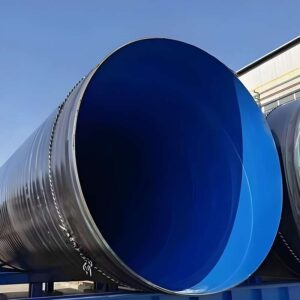
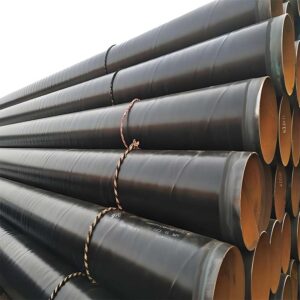
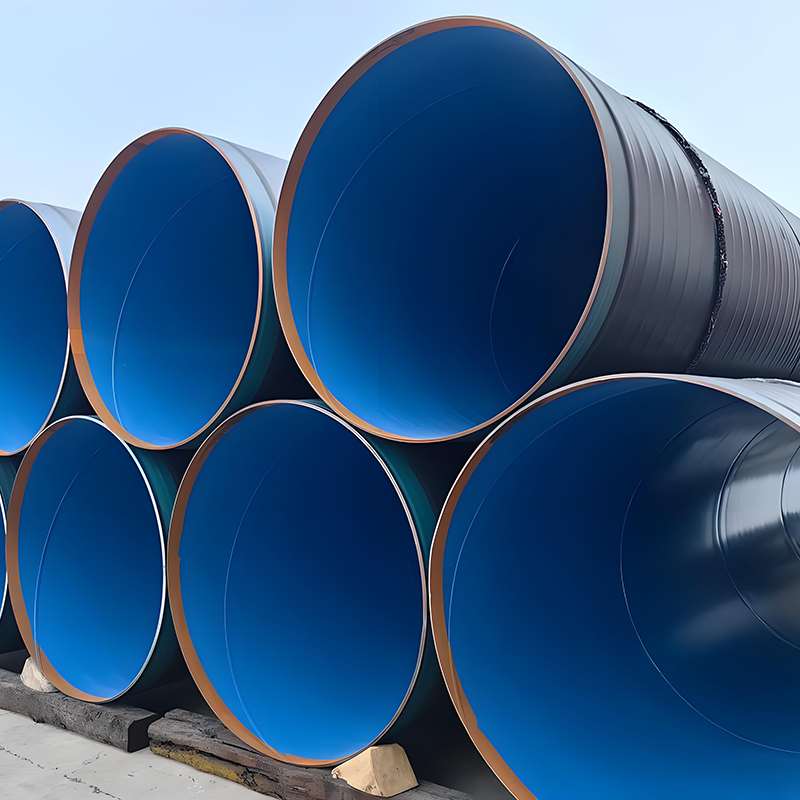
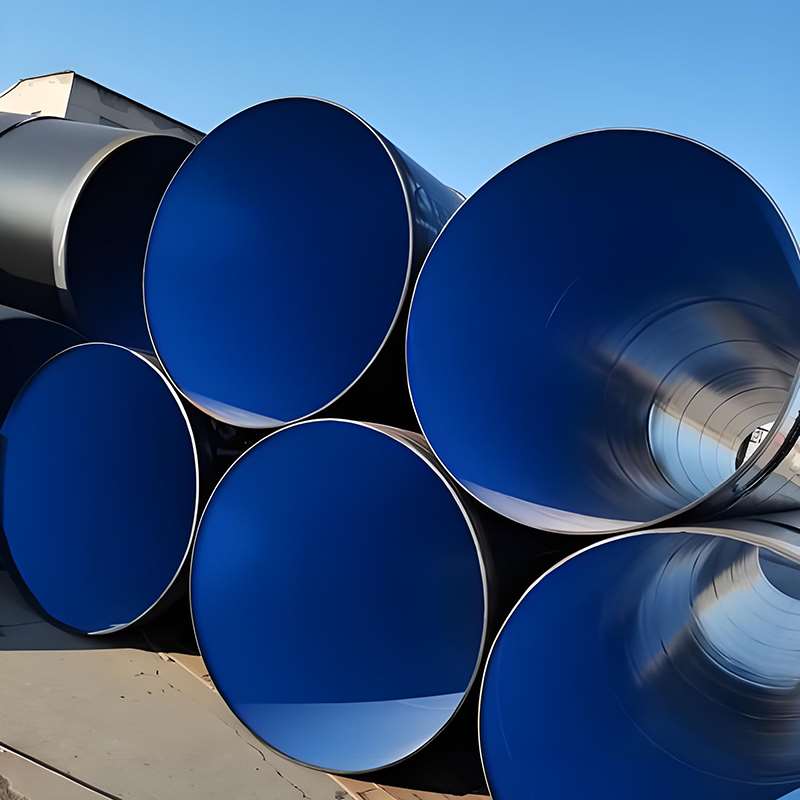
Large Diameter Coated Spiral Steel Pipe is a high-performance pipeline manufactured using the Spiral Submerged Arc Welding (SSAW) process and enhanced with protective anti-corrosion coatings on the internal and external surfaces.
Designed for demanding fluid transportation applications, this product is widely used in water transmission projects, oil and gas pipeline systems, municipal utility networks, and large-scale infrastructure developments. It offers excellent structural strength, large diameter capabilities, cost-effective installation, and an extended service life, making it an ideal choice for long-distance and high-volume pipeline projects.
II. Product Structure
Large-diameter coated spiral steel pipes typically consist of a base pipe, a weld seam, and internal and external anti-corrosion coatings. The specific configuration can be tailored to different projects based on the transported medium (e.g., water, oil, or natural gas).
- Steel Pipe Body
The main body of the steel pipe is manufactured from hot-rolled steel coil and serves as the core pressure-bearing structure of the entire pipeline.
Material: Steel grades compliant with API 5L, ASTM, EN, and GB standards (e.g., Gr. B, X52, X60, etc.)
Forming Method: Submerged arc spiral welding (SSAW)
Function: Provides overall strength and pressure-bearing capacity
Features: High material utilization; suitable for large-diameter production
- Spiral Weld Structure
The key structural feature of spiral welded steel pipes is that the welds are arranged in a spiral pattern.
Welding method: Double-sided submerged arc welding
Weld location: Continuously distributed along the spiral direction of the pipe
Advantages:
More uniform stress distribution
Suitable for the production of large-diameter pipes
High production efficiency
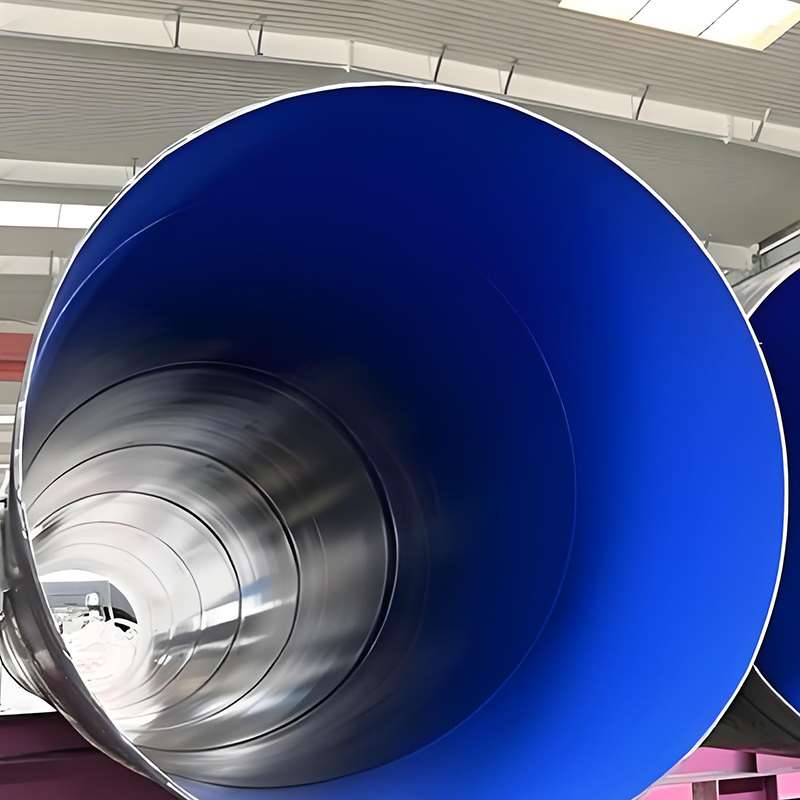
- Internal Corrosion Protection Layer
Depending on the transported medium, different internal corrosion protection structures can be selected:
Common types:
Cement mortar lining
Used in water conveyance projects
Prevents scaling and corrosion
Epoxy coating (FBE / Epoxy Coating)
Used for oil, gas, or chemical media
High resistance to chemical corrosion
Function: Protects the inner wall of the pipeline, reduces frictional resistance, and extends service life
- External Anti-Corrosion Coating
The external anti-corrosion coating is a critical protective layer for underground or outdoor projects.
Common configurations:
3PE Anti-Corrosion Coating (3-layer Polyethylene Coating)
Anti-corrosion + Impact resistance + Water resistance
The mainstream solution for underground pipelines
FBE Epoxy Powder Coating
Strong adhesion
Suitable for highly corrosive environments
Function: Prevents soil corrosion, moisture erosion, and mechanical damage
- Pipe End Preparation
To meet on-site installation requirements, pipe ends are typically prepared in standardized ways:
Plain End
Beveled End
Flanged End (optional)
Purpose: To improve on-site welding efficiency and connection quality
III. Application Background of Large Diameter Coated Spiral Steel Pipe
Why Modern Large-Scale Projects Require Large Diameter Steel Pipes
With the rapid development of urbanization, energy transportation networks, and industrial infrastructure, water transmission, oil transportation, and industrial fluid conveyance systems are demanding increasingly higher pipeline capacities.
Compared with smaller-diameter pipelines, large diameter coated spiral steel pipes offer several significant advantages:
- Higher flow capacity for large-volume transportation
- Improved efficiency in long-distance transmission systems
- Reduced pumping station operating frequency and energy consumption
- Fewer parallel pipeline installations required
- Lower overall project construction and maintenance costs
- Better suitability for large-scale infrastructure developments
As a result, large diameter spiral steel pipes have become one of the preferred pipeline solutions for modern water transmission projects, oil and gas transportation systems, energy infrastructure, and municipal engineering applications.
The Growing Importance of Corrosion Protection
In addition to transportation capacity, corrosion resistance has become a critical consideration as pipeline systems are increasingly installed underground, exposed to harsh environmental conditions, and expected to operate reliably for decades.
By applying internal and external anti-corrosion coatings, the pipeline can achieve:
- Enhanced resistance to corrosion and environmental degradation
- Extended service life
- Improved operational reliability and safety
- Reduced maintenance requirements and lifecycle costs
- Better long-term performance in demanding service environments
For these reasons, coated large diameter spiral steel pipes are widely adopted in infrastructure projects where durability, reliability, and long-term operational stability are essential.
IV. Applications in Large-Scale Infrastructure Projects
1. Water Transmission Projects
Large Diameter Coated Spiral Steel Pipe is widely used in a variety of water transportation applications, including:
- Municipal water supply systems
- Long-distance water diversion projects
- Agricultural irrigation pipelines
- Seawater desalination transmission systems
- Industrial circulating water systems
In water transmission projects, the internal anti-corrosion lining helps reduce flow resistance, improve hydraulic efficiency, and minimize scale buildup during long-term operation.
The external anti-corrosion coating provides effective protection against soil moisture, groundwater, and corrosive substances, significantly extending the service life of buried pipelines.
For high-volume water transportation projects, large diameter spiral steel pipes offer the required flow capacity while helping reduce overall construction, operation, and maintenance costs.
2. Oil and Natural Gas Transportation
In the oil and gas industry, large diameter coated spiral steel pipes are commonly used for:
- Crude oil transmission pipelines
- Long-distance natural gas pipelines
- Oil and gas gathering and transportation systems
- Refinery and petrochemical process pipelines
Oil and gas transportation systems typically involve long transmission distances, high operating pressures, and challenging environmental conditions. As a result, pipeline strength and corrosion resistance are critical performance requirements.
By utilizing advanced coating systems such as 3PE (Three-Layer Polyethylene), FBE (Fusion Bonded Epoxy), and Coal Tar Epoxy coatings, the pipeline can achieve enhanced durability in buried, humid, and corrosive environments.
In addition, SSAW spiral steel pipes offer significant cost advantages in large-diameter production, making them an economical choice for major long-distance pipeline projects.
3. Marine and Port Engineering
Large diameter coated spiral steel pipes are extensively used in marine and coastal infrastructure projects, including:
- Seawater transportation systems
- Port and harbor construction
- Offshore and marine piling foundations
- Subsea pipeline projects
Marine environments are characterized by high salinity, high humidity, and severe corrosion risks, placing stringent requirements on pipeline protection systems.
Heavy-duty anti-corrosion coating systems effectively resist seawater corrosion, salt spray exposure, and moisture penetration, helping to extend the operational life of the pipeline and reduce maintenance requirements.
4. District Heating and Industrial Pipeline Systems
Large diameter coated steel pipes are also widely applied in:
- District heating networks
- Thermal power plant pipeline systems
- Chemical processing pipelines
- Industrial fluid transportation systems
In environments involving elevated temperatures, high humidity, or corrosive media, anti-corrosion coatings play a vital role in minimizing corrosion risks, reducing maintenance costs, and ensuring long-term operational reliability.
For large-scale industrial projects, SSAW spiral steel pipes provide an excellent combination of high strength, efficient manufacturing, and cost-effective project execution, making them a preferred solution for demanding pipeline applications.
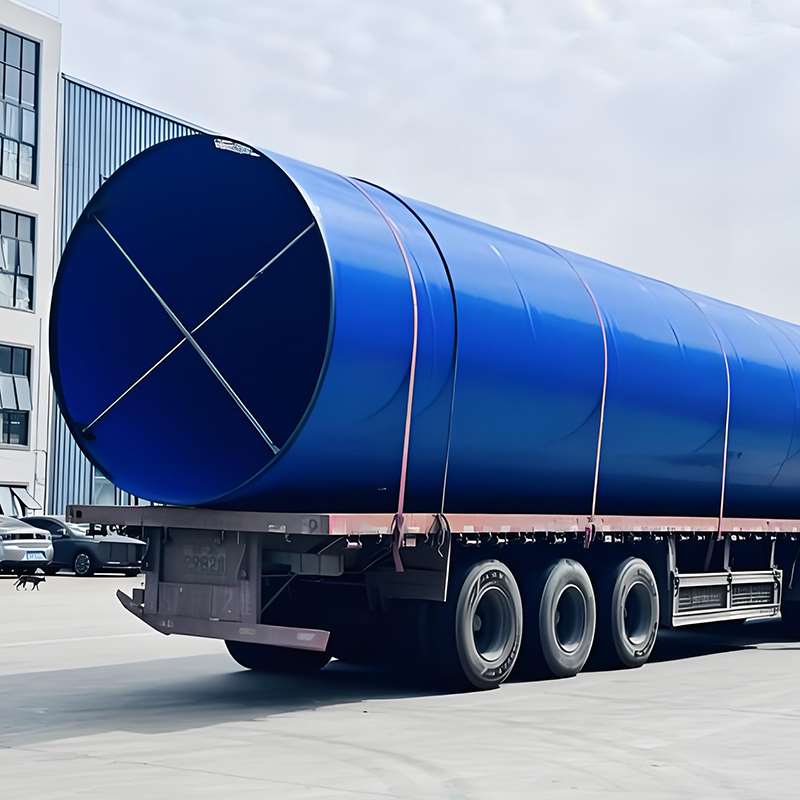
V. Challenges in Transportation and Installation
1. Common Issues Encountered During the Transportation of Large-Diameter Steel Pipes
- Deformation of pipe ends due to impact
- Scratches or peeling of the anti-corrosion coating
- Deformation of steel pipes caused by uneven lifting forces
- Rolling displacement during long-distance transportation
- Moisture absorption or salt spray corrosion during maritime transport
For steel pipes that have undergone 3PE or FBE anti-corrosion treatment, once the anti-corrosion coating is damaged, localized corrosion spots are likely to form during subsequent underground operation, thereby affecting the overall service life of the pipeline.
2. Protecting the anti-corrosion coating is a critical step during transportation and construction.
For example:
- Steel wire ropes coming into direct contact with steel pipes during hoisting
- Coating abrasion caused by dragging on the ground
- Scratches to the anti-corrosion coating from backfill stones
- Failure to promptly apply anti-corrosion treatment to weld joints
Although these issues may not be apparent during the construction phase, they can easily lead to corrosion hazards after long-term operation.
Therefore, the following measures are typically implemented at construction sites:
- Flexible lifting slings
- Pipe end protection measures
- Anti-corrosion joint repair
- Electrical spark testing
- Anti-corrosion inspection prior to backfilling
to ensure the integrity of the pipeline’s overall anti-corrosion system.
3. Installation efficiency directly impacts the project timeline
In long-distance water, oil, and energy transmission projects, the installation efficiency of large-diameter steel pipes directly affects the overall project schedule.
If steel pipes exhibit:
- Significant roundness deviations
- Unstable weld quality
- Poor dimensional accuracy
- Insufficient adhesion of the anti-corrosion coating
the following issues are likely to arise on-site:
- Difficulty in aligning pipe ends
- Welding rework
- Increased joint repair work
- Delays in installation progress
Therefore, large-scale projects typically place greater emphasis on the following aspects of steel pipes:
- Dimensional stability
- Weldability
- Anti-corrosion quality
- Transportation protection capabilities
to reduce on-site construction risks and minimize long-term maintenance costs.
VI. Procurement Standards for Engineering Projects
In large-scale water and oil transmission projects and infrastructure projects, when procuring large-diameter corrosion-resistant spiral-welded steel pipes, project owners typically focus not only on product price but also on whether the pipes can meet construction requirements, ensure long-term operational stability, and satisfy project acceptance standards.
In engineering procurement, the dimensional accuracy, weld quality, and anti-corrosion performance of steel pipes directly impact on-site installation efficiency and future maintenance costs. For example, if the roundness deviation of the steel pipes is significant, it can lead to difficulties in aligning the pipes during on-site installation; if the adhesion of the anti-corrosion coating is insufficient, the coating may be damaged during transportation or backfilling, thereby increasing the risk of corrosion in the future.
Therefore, during the procurement process, many projects place particular emphasis on verifying the following aspects:
- Steel pipe standards and material grades
- Non-destructive testing reports for welds
- Type and thickness of the anti-corrosion coating
- Electrical spark testing results
- Dimensional tolerances and roundness control
- Third-party inspection documentation
- Packaging and transportation protection plans
- Delivery lead times and batch delivery capabilities
For long-distance buried pipelines and large-scale energy projects, stable product quality and a reliable anti-corrosion system are often more important than simply low prices. This is because if rework, anti-corrosion damage, or dimensional deviations occur during construction, the overall project costs may far exceed the price of the materials themselves.
VII. Testing Standards
| Inspection Item | Inspection Content | Inspection Purpose | Common Standards / Requirements |
|---|---|---|---|
| Raw Material Inspection | Chemical composition and mechanical properties of steel coils | Ensure raw materials meet engineering requirements | API 5L, ASTM, EN standards |
| Outer Diameter Inspection | Pipe outer diameter dimensional deviation | Ensure installation accuracy and joint alignment | Controlled within standard tolerances |
| Wall Thickness Inspection | Actual wall thickness measurement | Ensure pipe pressure-bearing capacity | Ultrasonic thickness measurement |
| Length Inspection | Single pipe length measurement | Meet project construction requirements | As per contract length |
| Roundness Inspection | Ovality and roundness deviation of pipe body | Avoid installation difficulties on site | Controlled within standard limits |
| Straightness Inspection | Pipe bending degree measurement | Ensure stability in long-distance installation | Minimize installation deviation |
| Weld Visual Inspection | Surface quality of weld seam | Check visible welding defects | No cracks, porosity, slag inclusion, etc. |
| Ultrasonic Testing (UT) | Internal weld defect detection | Detect internal cracks or defects | Common for large-diameter SSAW pipes |
| Radiographic Testing (RT) | Internal weld quality inspection | Verify weld integrity | Common for critical pipeline projects |
| Hydrostatic Test | Pipe pressure resistance test | Verify pressure-bearing capacity and sealing performance | As per project pressure requirements |
| Coating Thickness Inspection | Measurement of coating thickness | Ensure anti-corrosion service life | 3PE / FBE coating standards |
| Coating Adhesion Test | Coating bonding strength test | Prevent coating delamination | According to adhesion grade requirements |
| Holiday (Spark) Test | Detection of pinholes and coating defects | Ensure coating integrity | Common for buried pipelines |
| Impact Resistance Test | Coating impact resistance evaluation | Reduce transport and installation damage risk | Applicable to heavy-duty coatings |
| Bevel Inspection | Pipe end bevel angle and machining quality | Improve field welding efficiency | Complies with welding procedure requirements |
| Marking & Traceability Inspection | Heat number, batch number, stencil marking | Ensure quality traceability | Common engineering requirement |
| Packaging & Shipping Inspection | Pipe end protection and packaging condition | Reduce transport damage | Export standard packaging required |
VIII. Frequently Asked Questions (FAQ) on Large Diameter Coated Spiral Steel Pipe Procurement
1. How to determine whether steel pipes meet quality requirements?
In engineering procurement, product quality should not be judged solely by appearance or price. The key factor is whether the product complies with project specifications and applicable standards.
Key evaluation points include:
- Applicable standards (e.g., API 5L, ASTM, EN, etc.)
- Mill Test Certificate (MTC)
- Non-Destructive Testing (NDT) reports for welds (UT/RT)
- Hydrostatic test reports
- Coating inspection and testing results
Reputable suppliers typically provide a complete quality documentation package to support project acceptance, inspection, and full traceability.
2. What is the difference between spiral steel pipes and seamless or longitudinal welded steel pipes?
Spiral steel pipes (SSAW) offer significant advantages in large-diameter production, including lower manufacturing costs, suitability for long-distance transmission projects, and flexible customization of diameter and wall thickness.
Seamless steel pipes are generally used for small-diameter, high-pressure applications and are relatively more expensive. Longitudinal submerged arc welded pipes (LSAW) are commonly used in high-pressure long-distance pipelines, but are less economical than spiral steel pipes in large-diameter and cost-sensitive projects.
Therefore, for large-scale water transmission, oil transportation, and infrastructure projects, spiral steel pipes are often the preferred choice.
3. What types of anti-corrosion coatings are available, and how should they be selected?
Common anti-corrosion coating systems include 3PE (Three-Layer Polyethylene), FBE (Fusion Bonded Epoxy), and Coal Tar Epoxy.
Selection depends primarily on the service environment:
- Buried pipelines: 3PE coating is most commonly used
- High-temperature or chemical environments: FBE coating is preferred
- General anti-corrosion applications: Coal Tar Epoxy coating is often used
For long-distance oil, natural gas, and municipal engineering projects, 3PE anti-Corrosion spiral steel pipes are typically the preferred choice due to their excellent durability and extended service life.
4. Do dimensional tolerances of steel pipes affect installation?
Yes, they do.
Excessive deviations in outer diameter, ovality, or straightness can lead to difficulties in field alignment, poor welding fit-up, or rework, all of which directly impact construction efficiency.
Therefore, engineering projects typically enforce strict dimensional tolerance control and conduct individual inspection of each pipe before shipment to ensure smooth installation on site.
5. What is the typical delivery lead time?
The delivery time depends on order quantity, specifications, and coating requirements.
For standard large diameter spiral steel pipes, production typically takes approximately 20–45 days. If special coating systems such as 3PE are required, or if the order volume is large, the production cycle may be extended accordingly.
For engineering projects, it is recommended to confirm the production schedule in advance to avoid any impact on construction timelines.
6. How is the coating protected during transportation?
Reputable suppliers usually adopt specialized transportation and handling solutions, including pipe-end protective caps, wooden supports, anti-slip fixation systems, and soft lifting slings.
During loading and unloading, steel wire ropes are strictly prohibited from direct contact with the coated surface to prevent scratching, dragging, or impact damage.
For export shipments, waterproof packaging and reinforced bundling are also applied to minimize the risk of damage during sea freight or long-distance transportation.