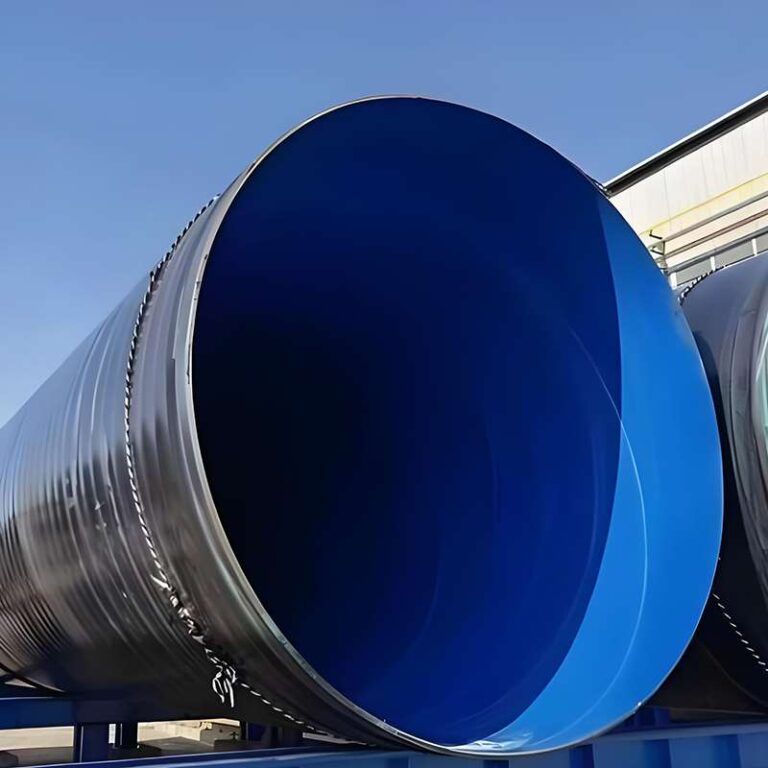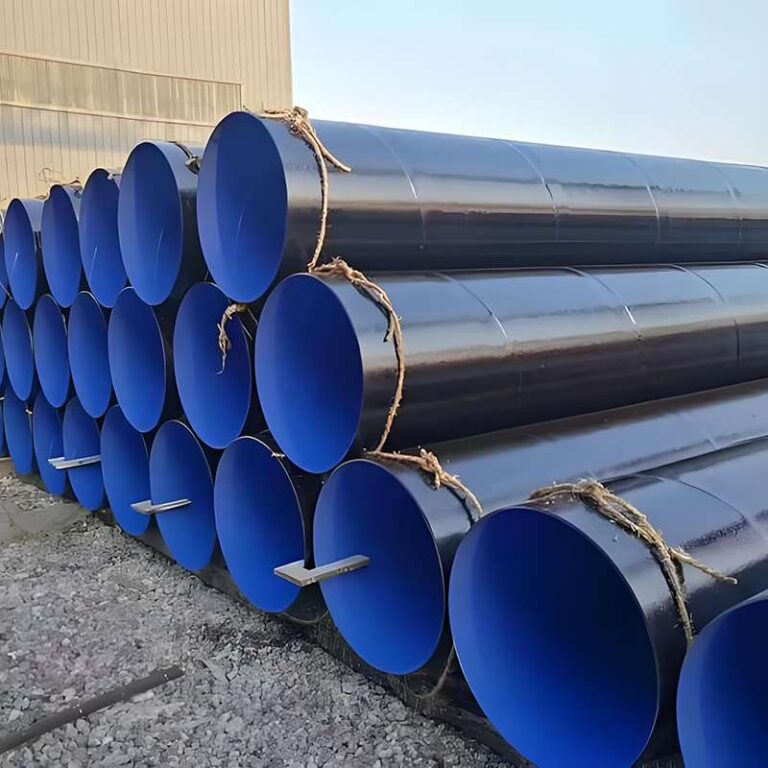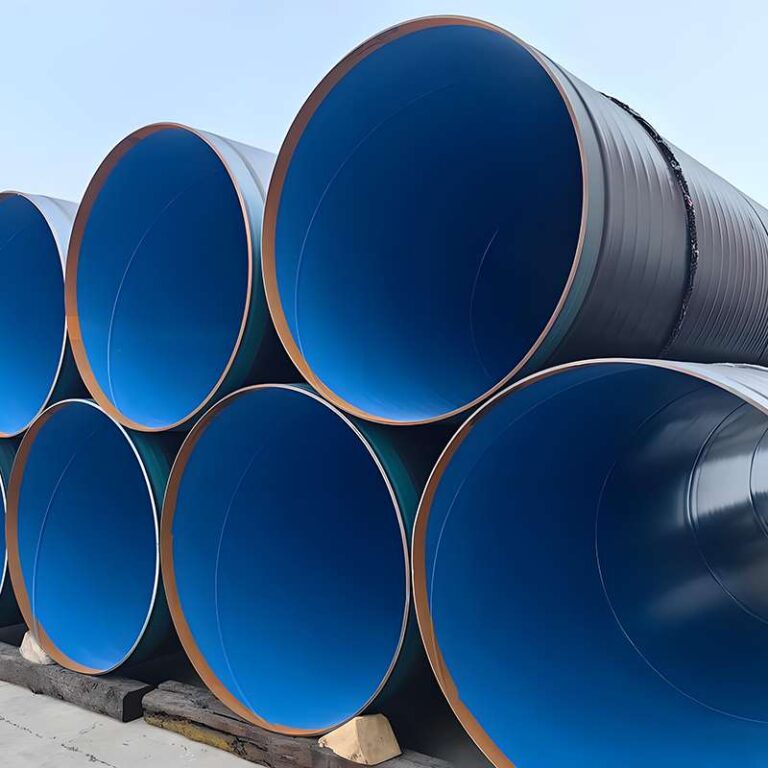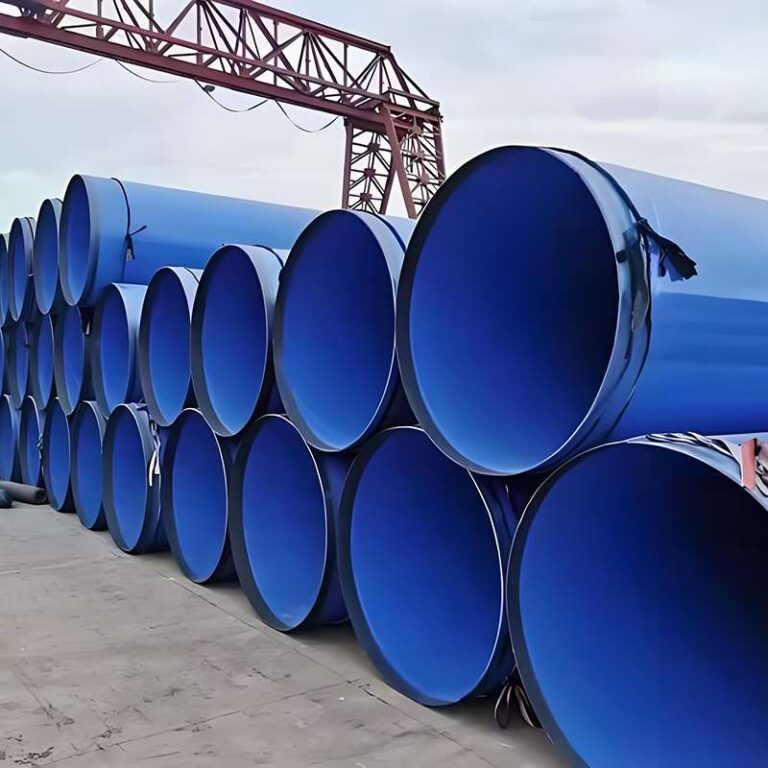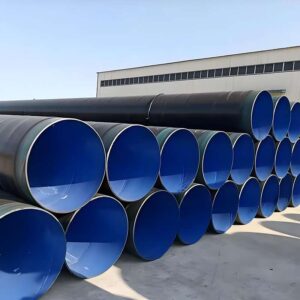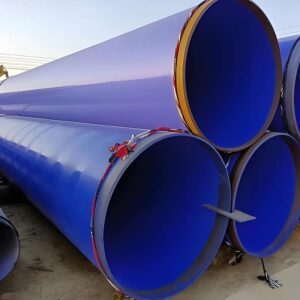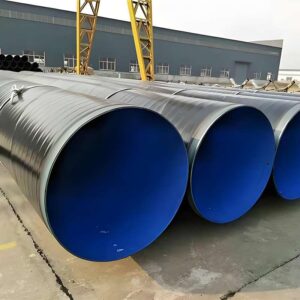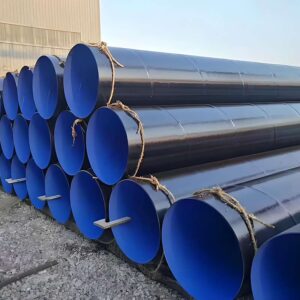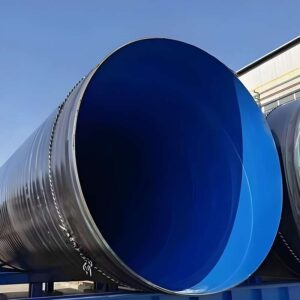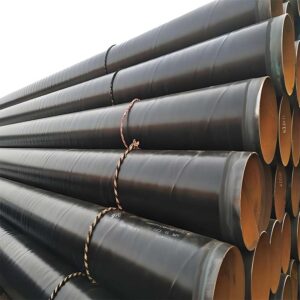
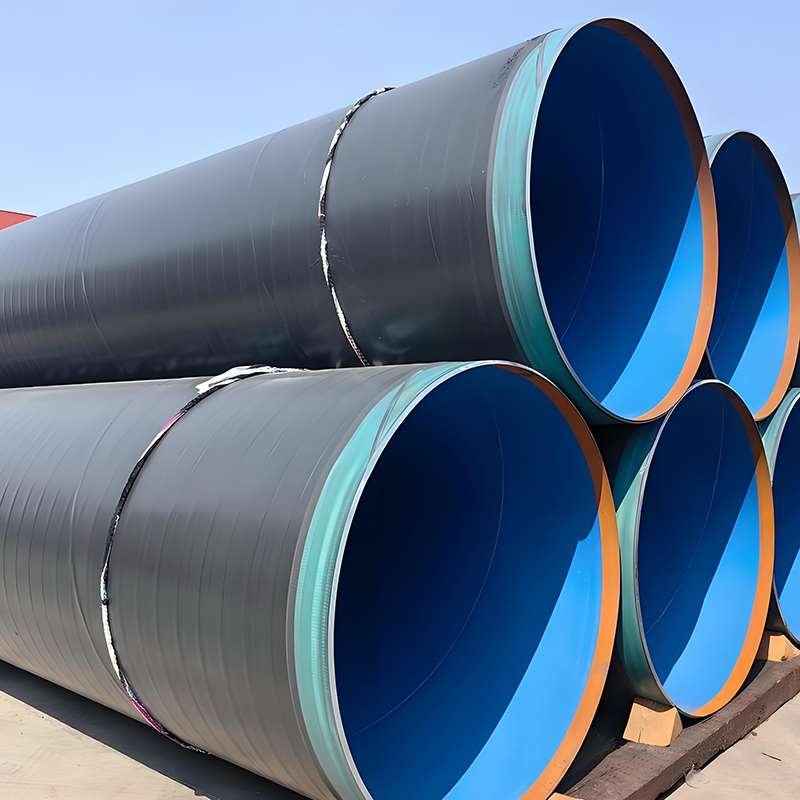
I. Overview of API 5L X52 3PE Coated Spiral Steel Pipe
The API 5L X52 3PE Coated Spiral Steel Pipe is a high-strength spiral welded steel pipe widely used in oil and gas transmission, water conveyance systems, and buried pipeline engineering applications.
Manufactured from API 5L X52 grade steel, this product is combined with a three-layer polyethylene (3PE) anti-corrosion coating system, providing excellent mechanical strength, superior corrosion resistance, and an extended service life.
It is specifically designed for long-distance transmission projects and complex underground environments, where durability, reliability, and resistance to soil and environmental corrosion are critical performance requirements.
II. How the 3PE Anti-Corrosion System Protects Steel Pipes
The “3PE” in API 5L X52 3PE Coated Spiral Steel Pipe refers to a three-layer anti-corrosion system. Think of it as a protective jacket for the steel pipe: it shields the pipe from rust and damage in underground, moisture-rich environments, significantly extending its service life.
The 3PE coating system consists of three key layers:
| Coating Layer | Function | Simple Analogy |
|---|---|---|
| Fusion Bonded Epoxy (FBE) Layer | Directly adheres to the steel surface to prevent corrosion | Acts like a “rust-proof primer” |
| Adhesive Layer (AD) | Firmly bonds the inner FBE layer with the outer PE layer | Functions like a “strong glue” |
| Polyethylene Outer Layer (PE) | Provides waterproofing, moisture resistance, abrasion resistance, and impact protection | Serves as a “protective shell” |
Why 3PE Offers Superior Corrosion Protection
Conventional steel pipes buried underground are susceptible to moisture, soil chemicals, microbial activity, and external mechanical damage. The 3PE system provides multi-layered protection by:
- Blocking contact between the steel and groundwater or air.
- Reducing corrosion caused by aggressive soils.
- Enhancing impact resistance during transportation and installation.
- Extending the overall lifespan of buried pipelines.
As a result, 3PE-coated steel pipes are widely used in oil and gas transmission, municipal water supply, natural gas distribution, and long-distance buried pipeline projects, where durability and reliability are essential.
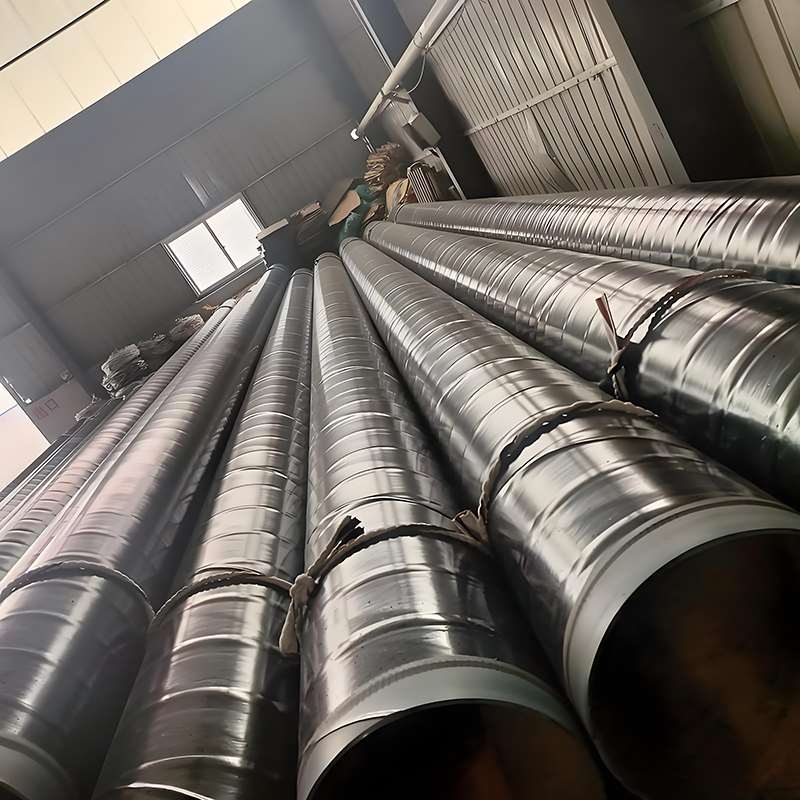
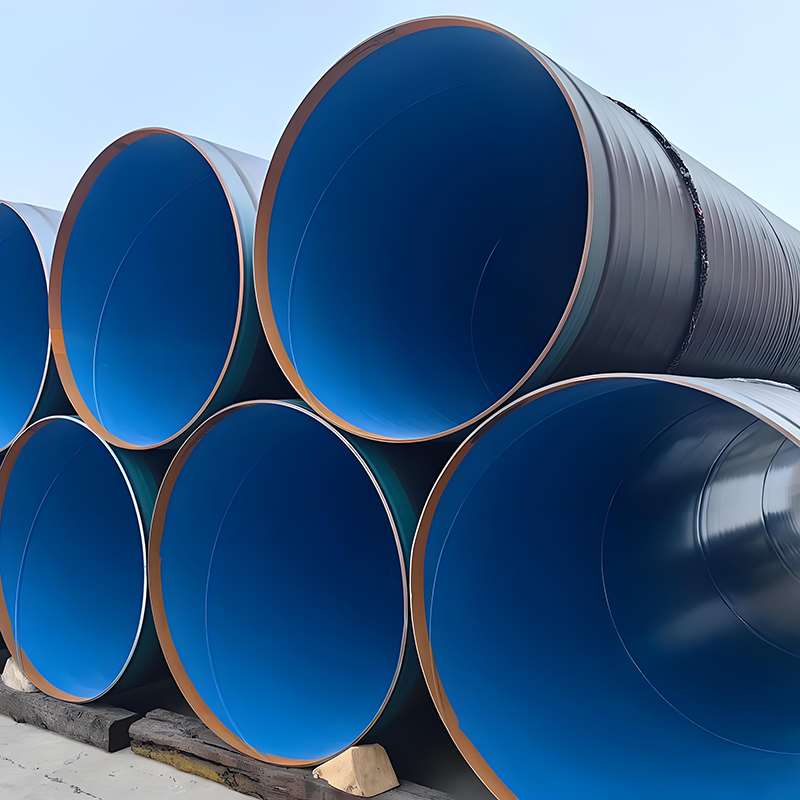
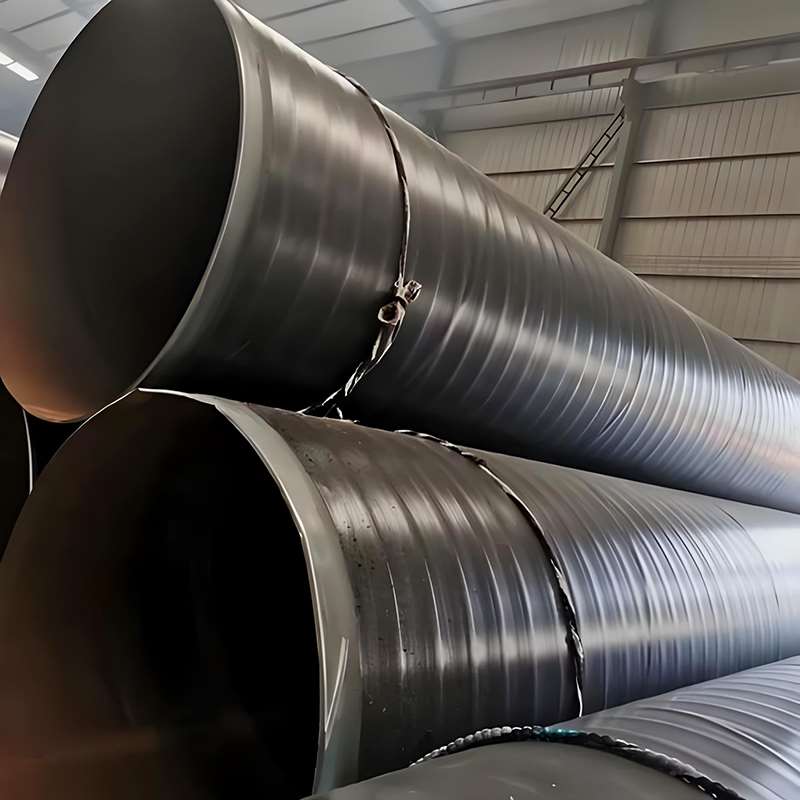
III. API 5L X52 3PE Coated Spiral Steel Pipe: A High-Performance Solution for Long-Distance Pipeline Networks
- Strategic Oil & Gas Transmission Pipelines
- Crude Oil Transport: Widely employed for long-distance transportation of crude oil and refined petroleum products. The X52-grade steel offers high toughness while efficiently handling transmission pressure, allowing for optimized wall thickness and reducing overall project costs.
- Natural Gas Networks: Ideal for urban gas mains and inter-regional natural gas pipelines. Its excellent impermeability ensures safe, high-pressure gas transmission.
- Large-Scale Inter-Basin Water Transfer Projects
- Municipal Water Supply: Utilized in city water diversion projects and primary water distribution networks. The combination of external 3PE anti-corrosion coating and internal friction-reducing lining protects against soil corrosion while ensuring water quality and improving flow efficiency.
- Industrial Water Systems: Provides stable, long-distance fluid transport in large-scale chemical plants and power generation facilities, supporting circulation and supply water systems.
- Buried Pipelines in Challenging Geological Conditions
- Harsh Environment Adaptability: Designed for highly corrosive environments such as saline-alkali soil, marshlands, and high-mineral-content soils. The 3PE coating delivers a robust physical protective barrier.
- Infrastructure Integration: Serves as a core component in utility tunnels, energy corridors, and cross-regional infrastructure, offering high stability and ease of maintenance for critical pipeline networks.
Why Choose the API 5L X52 + 3PE Solution?
| Dimension | Technical Advantage | Customer Value |
|---|---|---|
| Mechanical Performance | Minimum yield strength of 360 MPa (52,200 psi) | Supports higher transmission pressure and increases flow capacity |
| Corrosion Resistance | 3PE system (FBE + adhesive + polyethylene) | Designed service life up to 50 years, reducing long-term O&M costs |
| Joint Reliability | Excellent low carbon equivalent with strong weldability | Enhances construction efficiency and ensures leak-free welds |
| Economic Efficiency | Spiral welding process with large-diameter cost-effectiveness | Significantly lowers total project cost in long-distance, large-diameter pipelines |
This combination of high-strength X52 steel and 3PE anti-corrosion coating ensures durability, reliability, and economic efficiency, making it the preferred solution for long-distance oil, gas, and water pipeline projects.
IV. 30–50 Years Service Life Explanation
The API 5L X52 3PE Coated Spiral Steel Pipe is widely used in buried long-distance pipeline projects largely due to its extended service life. Under normal design, construction, and operating conditions, 3PE-coated steel pipes typically achieve a stable service life of approximately 30 to 50 years.
Why Do 3PE Pipes Offer a Longer Service Life?
Compared with conventional bare steel pipes, the 3PE anti-corrosion system provides multi-layer protection:
- The Fusion Bonded Epoxy (FBE) layer prevents steel corrosion at the base level.
- The adhesive layer enhances bonding strength between coating layers.
- The polyethylene (PE) outer layer blocks moisture ingress and protects against external mechanical damage.
This composite anti-corrosion structure effectively reduces the impact of groundwater, soil salinity, and humid environmental conditions on steel degradation.
Factors That Affect Actual Service Life
Although 3PE-coated pipes are designed for long-term performance, the actual service life may still be influenced by several factors:
| Factor | Impact on Service Life |
|---|---|
| Soil Corrosivity | High salinity or acidic/alkaline soils can accelerate corrosion |
| Coating Installation Quality | Damage or defects in the coating may reduce long-term protection performance |
| Operating Pressure & Temperature | Prolonged high pressure and elevated temperatures increase pipeline stress |
| Installation & Backfilling Practices | Improper handling may damage the anti-corrosion coating |
| Maintenance & Inspection | Regular inspection helps extend overall service life |
Engineering Value of a Long Service Life
A longer service life provides significant advantages for infrastructure projects:
- Reduced maintenance and replacement costs over the project lifecycle
- Lower risk of downtime due to repair or maintenance
- Improved operational stability of underground pipeline networks
- Better suitability for large-scale, long-term infrastructure developments
As a result, API 5L X52 3PE coated steel pipes are an ideal solution for projects requiring durability, reliability, and long-term operational efficiency.
V. Engineering Procurement Standards
| Item | Standard / Requirement | Description |
|---|---|---|
| Steel Pipe Standard | API 5L | Internationally recognized line pipe standard |
| Steel Grade | X52 (PSL1 / PSL2) | Commonly used for medium to high-strength transmission pipelines |
| Yield Strength | ≥ 360 MPa (52,000 psi) | Ensures pressure-bearing capacity |
| Tensile Strength | ≥ 455 MPa | Guarantees overall structural stability |
| Anti-Corrosion Standard | DIN 30670 / Project Specification | Standard applied for 3PE coating system |
| Coating Structure | 3PE (Three-Layer Polyethylene) | Fusion Bonded Epoxy + Adhesive + PE outer layer |
| Coating Thickness | Approx. 2.0–3.0 mm (as per design) | Determined according to engineering requirements |
| NDT (Non-Destructive Testing) | RT / UT inspection | Ensures weld seam quality |
| Material Certification | MTC (Mill Test Certificate) | Full traceability documentation required |
| Third-Party Inspection | SGS / Bureau Veritas (BV) / TPI (optional) | Used for project inspection and acceptance requirements |
VI. Pre-Purchase Checklist for API 5L X52 3PE Coated Spiral Steel Pipes
1. Key Items to Confirm Before Procurement
| Inspection Item | Details to Confirm | Purpose & Significance |
|---|---|---|
| Transport Medium | Crude oil, natural gas, water, chemical fluids, etc. | Different media require specific steel grades and corrosion protection levels |
| Operating Pressure | Design pressure vs. actual service pressure | Determines required wall thickness and pressure rating |
| Pipe Dimensions | Outer diameter, wall thickness, length | Ensures compliance with engineering design specifications |
| Steel Grade Requirement | X52 PSL1 or PSL2 | Oil and gas projects often require PSL2 for higher performance |
| Corrosion Protection Standard | 3PE coating standard and thickness | Environmental conditions dictate required anti-corrosion level |
| Service Environment | Buried, above-ground, humid, saline-alkaline soil, etc. | Impacts long-term corrosion resistance and service life |
| Welding Requirements | Suitability for on-site welding | Affects construction efficiency and weld quality |
| Testing Requirements | Hydrostatic testing, UT, RT, and other NDT | Ensures pipe and weld integrity |
| Third-Party Inspection | SGS, Bureau Veritas (BV), TUV, etc. | Common requirement for international project acceptance |
| Documentation | MTC (Mill Test Certificate), inspection reports, etc. | Needed for project records and quality traceability |
| Packaging & Transportation | Bulk, containerized, export packaging | Influences transport safety and delivery efficiency |
2. Common Procurement Recommendations for Engineering Projects
For large-scale buried pipeline networks, it is generally recommended to confirm the following before purchase:
- Whether PSL2 grade is required
- Whether enhanced 3PE corrosion protection is necessary
- Required coating thickness
- Need for on-site third-party inspection
- Need for hydrostatic pressure testing
- Pipe end configuration (beveled or plain ends)
- Project delivery schedule and transportation method
These factors directly affect pipe manufacturing, testing, delivery, and subsequent construction efficiency, making them critical for project planning and risk mitigation.
VII. Frequently Asked Questions on Selection
1. Which Projects Are Suitable for API 5L X52 3PE Coated Spiral Steel Pipes?
API 5L X52 3PE coated spiral steel pipes are widely used in:
- Long-distance oil and gas transmission pipelines
- Urban water main networks
- Municipal gas distribution projects
- Industrial circulation water systems
- Buried energy utility corridors
- Inter-basin water transfer projects
These pipes are generally recommended when a project requires:
- Long-distance transport
- Buried installation
- High operating pressure
- Extended service life
For low-pressure water supply projects, X42 pipes may be sufficient, whereas high-pressure oil and gas trunk lines may require higher grades such as X60 or X65.
2. How to Decide Between PSL1 and PSL2?
This is one of the most common questions in pipeline procurement.
| Grade | Characteristics | Typical Applications |
|---|---|---|
| PSL1 | Basic grade requirements | Standard water supply, low-pressure projects |
| PSL2 | Stricter chemical composition, impact performance, and testing requirements | Oil & gas, high-pressure, critical projects |
Projects such as:
- Natural gas transmission
- Oil pipelines
- International EPC projects
- High-pressure long-distance pipelines
typically require PSL2 because it enforces stricter standards for:
- Weld quality
- Impact toughness
- Non-destructive testing
- Material traceability
This ensures higher overall safety and reliability.
3. Should Buried Pipelines Use Standard 3PE or Enhanced 3PE?
The choice depends mainly on soil conditions and service life requirements.
| Corrosion Protection Level | Suitable Environment |
|---|---|
| Standard 3PE | Normal soil, general municipal projects |
| Enhanced 3PE | Saline-alkali soils, humid regions, highly corrosive environments |
For projects located in:
- Coastal areas
- Saline-alkali land
- Marshlands
- High groundwater regions
enhanced 3PE is recommended. While slightly more expensive, it significantly reduces long-term corrosion and maintenance risks, making it ideal for buried pipelines with extended service life.
4. How to Select the Appropriate Wall Thickness?
Wall thickness is primarily determined by:
- Operating pressure
- Transported medium
- Pipe diameter
- Safety factor
- Project standards
General guidelines:
- Higher pressure → thicker walls
- Larger diameter → generally thicker walls
- Natural gas projects → higher safety requirements
Typical ranges:
| Application | Common Wall Thickness |
|---|---|
| Municipal water supply | 6–10 mm |
| Medium-pressure oil & gas transmission | 8–14 mm |
| High-pressure long-distance pipelines | ≥ 14 mm |
Recommendation: Always calculate wall thickness based on design pressure rather than relying solely on empirical values.
5. Why Are Spiral Welded Pipes (SSAW) Preferred for Long-Distance Projects?
For large-diameter pipelines, SSAW pipes often offer a better cost-performance ratio. Key advantages include:
- Capability to produce large-diameter pipes
- Higher raw material utilization
- More economical compared with other manufacturing methods
- Suitable for long-distance transmission
They are especially prevalent in:
- Water supply projects
- Large-scale buried networks
- Long-distance energy pipelines
For extremely high-pressure, small-diameter projects, some engineers may still choose LSAW or seamless pipes.
6. Commonly Overlooked Issues When Procuring API 5L X52 3PE Pipes
Many procurement teams focus only on price, but the following factors are equally critical:
- Compliance with Project Standards
Ensure the pipe meets actual project requirements, such as:- API 5L PSL2
- DIN 30670
- ISO standards
- Project-specific specifications
- Coating Thickness and Quality
Low-cost products may have:- Insufficient coating thickness
- Weak adhesion
- Uneven coating
This directly affects the pipe’s service life.
- Complete Inspection Documentation
Confirm that the following are provided:- MTC (Mill Test Certificate)
- Hydrostatic test reports
- UT/RT inspection reports
- Coating inspection reports
Ensures smooth project acceptance and quality traceability.
- Transportation and Handling Protection
Although 3PE coatings are corrosion-resistant, impact or scratches during transport can compromise long-term protection.
Large-scale projects typically require:- End protection capsCoating safeguardsExport-grade packaging