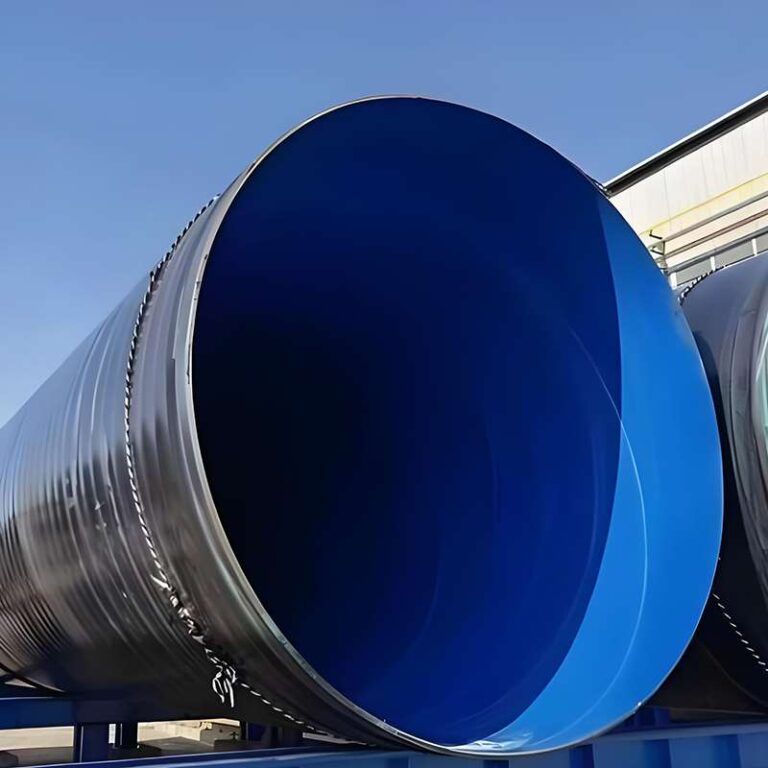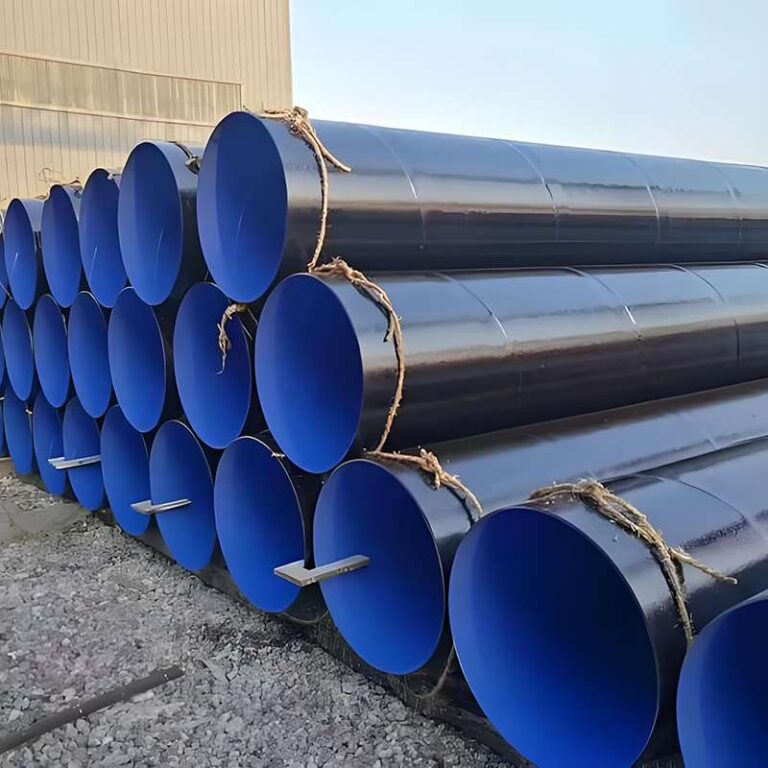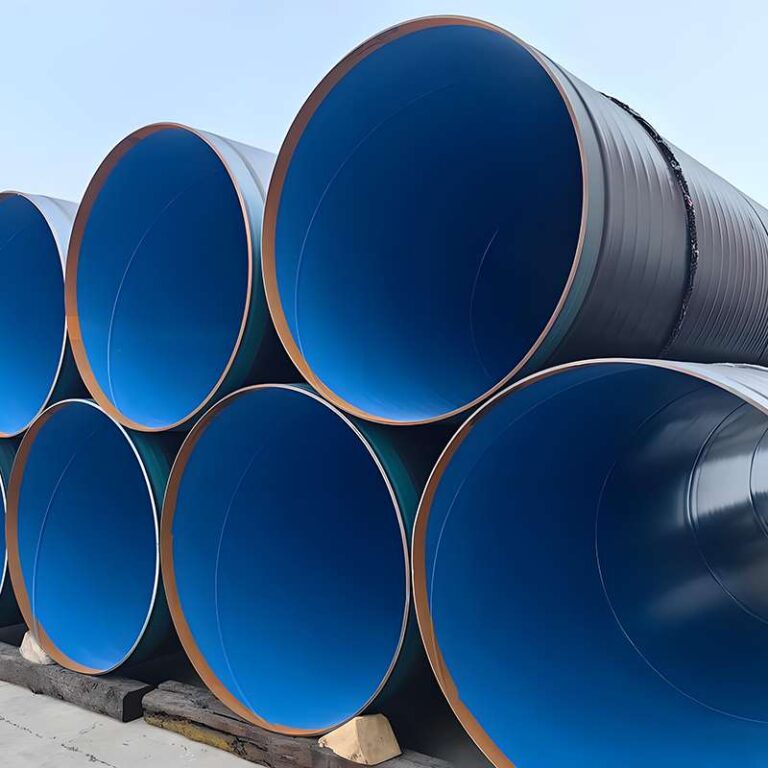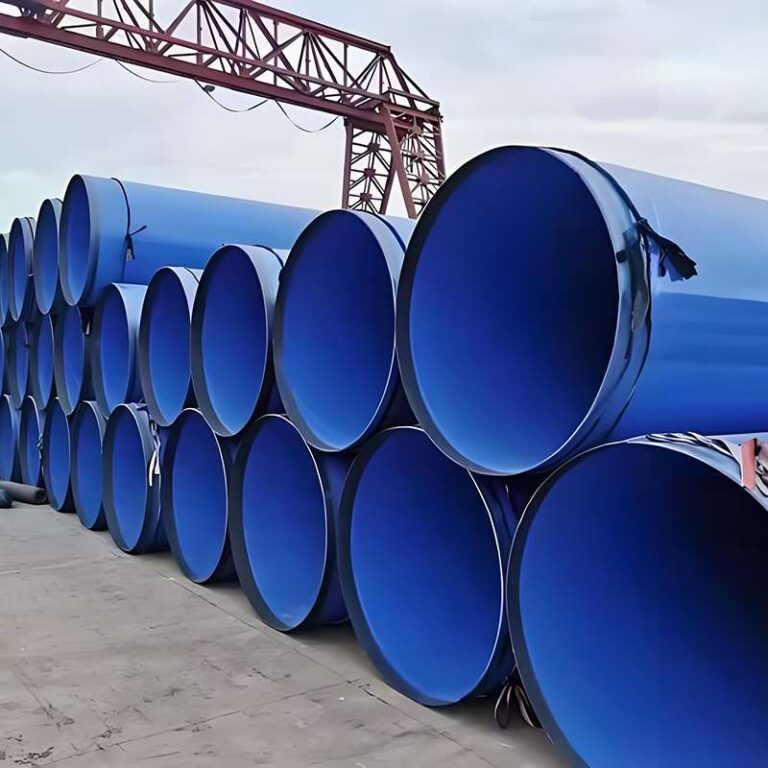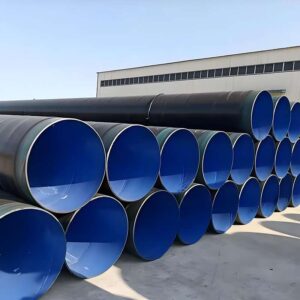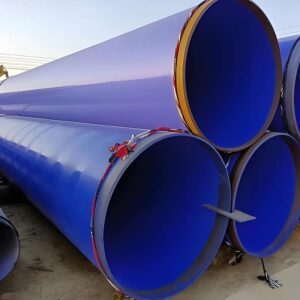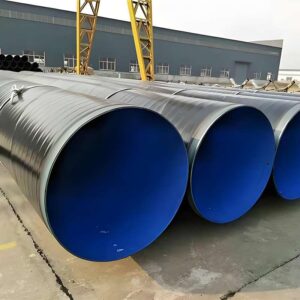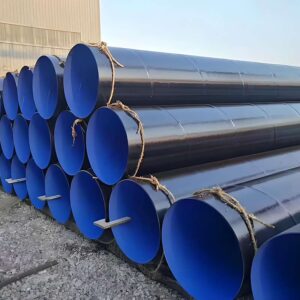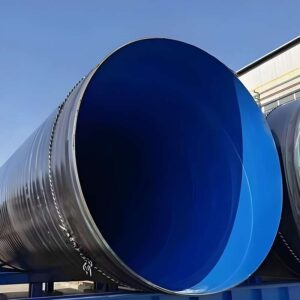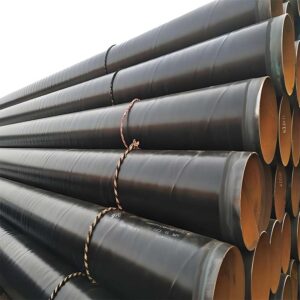
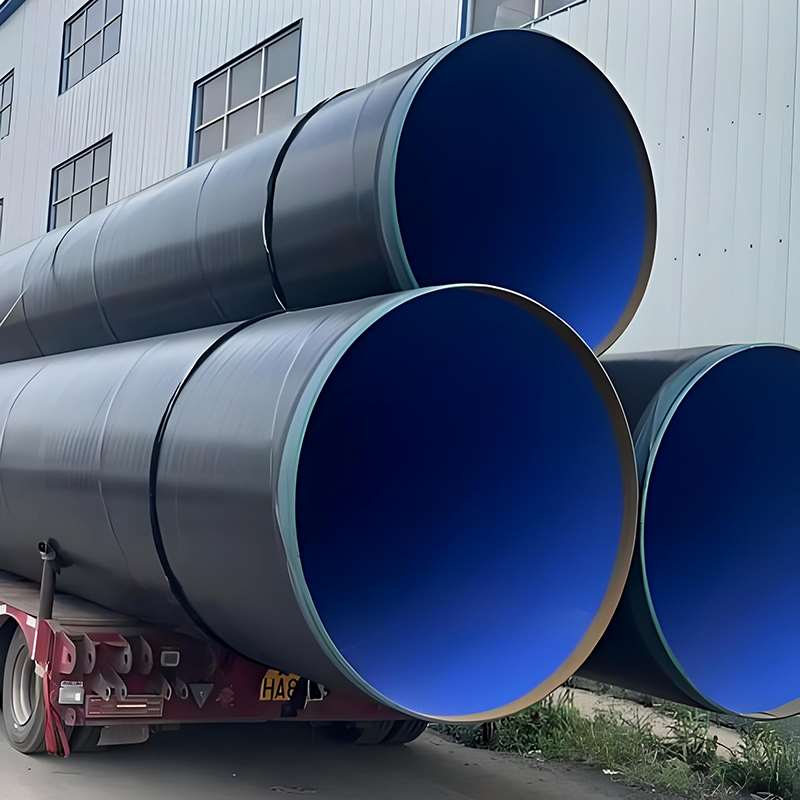
I. Introduction to API 5L X42 3PE Coated Spiral Steel Pipe
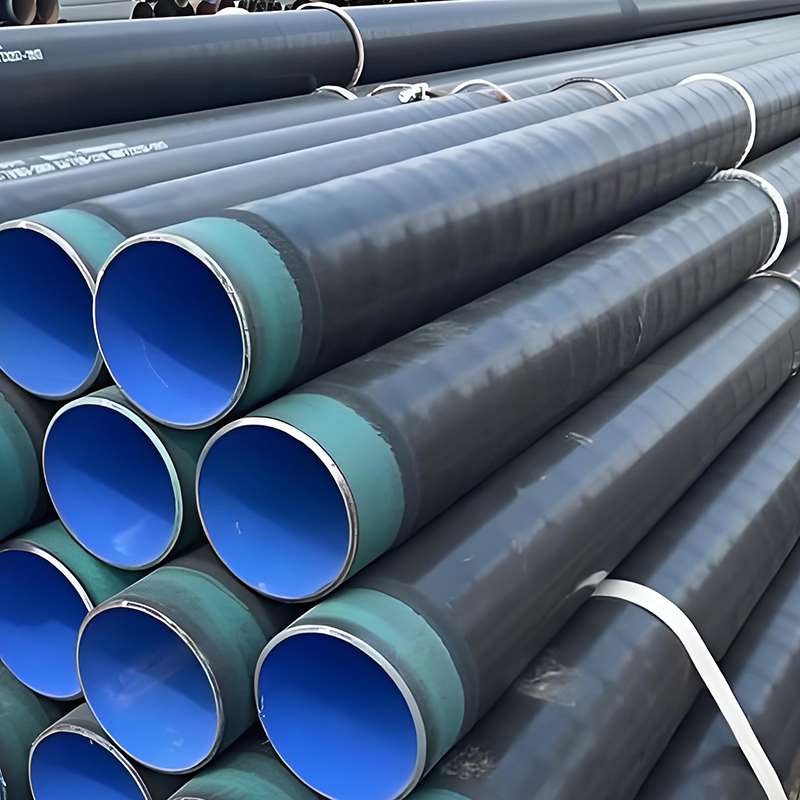
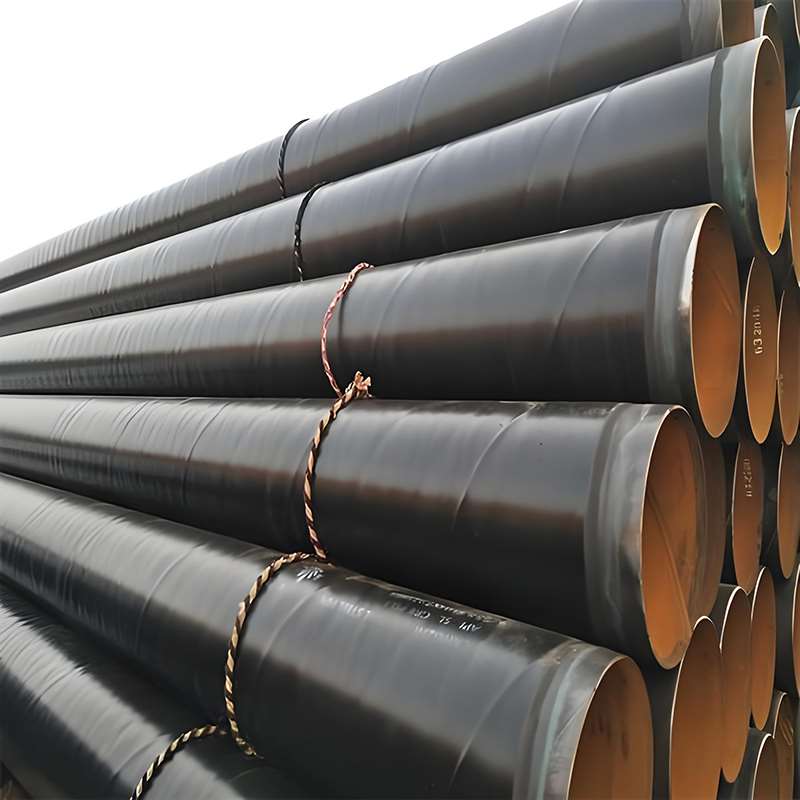
The API 5L X42 3PE Coated Spiral Steel Pipe is manufactured using X42 grade steel, making it suitable for medium- to low-pressure transmission applications. It provides a balanced combination of strength and toughness while incorporating a 3-layer polyethylene (3PE) anti-corrosion coating system, which significantly enhances the pipe’s corrosion resistance in buried and humid operating environments.
This type of pipe is widely used in municipal water and gas transmission systems, as well as general-purpose pipeline engineering projects requiring reliable performance and long service life under standard operating conditions.
II. Overview of 3PE Anti-Corrosion Coating Structure
3PE (Three-Layer Polyethylene) anti-corrosion technology is one of the most widely used coating systems for buried steel pipelines. The term “3PE” refers to the three protective layers that form this structure. It combines the strong adhesion of fusion bonded epoxy (FBE) with the environmental resistance of polyethylene (PE) to provide long-term corrosion protection.
1. Breakdown of 3PE Coating Structure
| Layer | Material | Typical Thickness | Primary Function |
|---|---|---|---|
| Base Layer | Fusion Bonded Epoxy (FBE) | 60–150 μm | Core anti-corrosion layer: provides strong adhesion and cathodic disbondment resistance, directly protecting the steel surface. |
| Adhesive Layer | Adhesive (AD) | 170–250 μm | Transition layer: a modified polyolefin that chemically bonds the FBE base layer to the PE top layer, preventing interlayer separation. |
| Top Layer | High-Density Polyethylene (HDPE) | 1.8–3.7 mm | Physical protection layer: offers impact resistance, water impermeability, insulation, and weathering resistance, safeguarding the pipe against soil stress damage. |
2. Detailed Technical Characteristics
Fusion Bonded Epoxy (FBE):
- Applied at steel pipe surface temperatures above 200°C.
- Cures into a dense, cross-linked structure that prevents penetration of moisture and corrosive chemicals.
Adhesive Layer (AD):
- Because PE is non-polar and cannot directly bond to epoxy, the adhesive contains polar functional groups.
- At high temperatures, it reacts with epoxy groups to tightly bond the three layers, preventing delamination.
Polyethylene (PE):
- Typically applied using a side-winding or sleeve extrusion process.
- Provides excellent water resistance and electrical insulation, reducing current consumption for cathodic protection in long-distance pipelines.
3. Key Advantages
- Extremely Long Service Life: Designed lifespan for buried environments is typically 50+ years.
- High Mechanical Strength: The thick PE layer ensures the pipe resists damage during transport, handling, and backfilling.
- Ultra-Low Water Absorption: Compared to coal-tar or glass-fiber coatings, 3PE has minimal water uptake, ensuring stable anti-corrosion performance.
- Strong Environmental Adaptability: Suitable for harsh soil conditions, from arid deserts to humid wetlands.
4. Comparison of Main 3PE Standards
| Standard Code | Standard Name / Country | Scope & Characteristics |
|---|---|---|
| GB/T 23257 | Chinese National Standard | Most widely used in China; integrates German and Petroleum Ministry standards; stringent requirements on thickness and performance. |
| DIN 30670 | German Standard | Internationally recognized as the origin of 3PE technology; often specified for export projects in the Middle East and Europe. |
| SY/T 0413 | Chinese Petroleum & Natural Gas Standard | Core standard for early domestic pipeline construction; currently used mainly for low- to medium-pressure oil & gas pipelines. |
| CAN/CSA Z245.21 | Canadian Standard | Focuses on physical performance of polyethylene coating; commonly used in North America and associated overseas projects. |
| NF A 49-710 | French Standard | Frequently applied in energy pipeline projects in Africa and French-speaking regions. |
| ISO 21809-1 | International Standard (ISO) | Aims to unify global pipeline coating specifications; commonly used as the benchmark in large multinational pipeline tenders. |
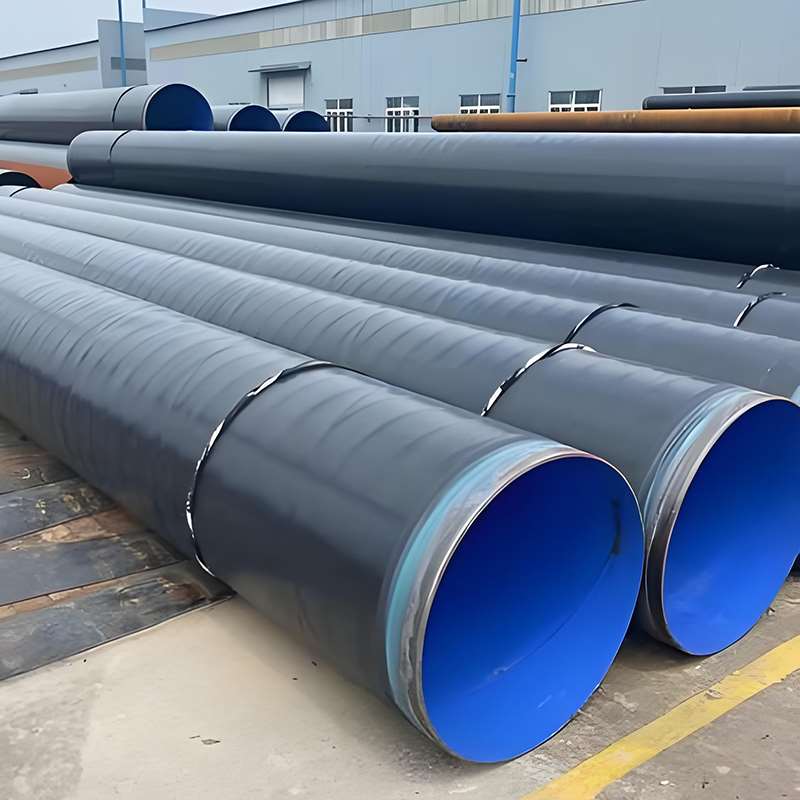
III. Why Buried Pipelines Commonly Use 3PE Anti-Corrosion Coating
Buried pipelines are exposed to complex environments including moist soils, groundwater, microbial activity, and stray electrical currents. Insufficient corrosion protection can lead to rust, coating damage, and even leakage, compromising the pipeline’s service life and operational safety.
Among the various anti-corrosion solutions, API 5L X42 3PE Coated Spiral Steel Pipe is widely adopted in municipal water supply, gas transmission, and underground utility networks due to its stable corrosion resistance and long service life.
1. Excellent Water and Corrosion Resistance
The polyethylene (PE) top layer has a very low water absorption rate, effectively isolating moisture and corrosive agents and reducing the risk of steel corrosion in wet environments.
2. Superior Abrasion and Impact Resistance
During transportation, handling, and backfilling, the 3PE coating provides strong resistance to abrasion from sand and gravel and external impacts, minimizing the probability of coating damage.
3. Extended Service Life
The combination of FBE base layer, adhesive (AD) intermediate layer, and PE top layer forms a multi-layer composite protection system, significantly enhancing the durability of buried steel pipelines.
4. Reduced Maintenance Costs
The stable anti-corrosion performance helps to lower long-term expenses associated with maintenance, replacement, and operational downtime, making 3PE-coated pipelines ideal for long-term underground network projects.
IV. Water and Gas Transmission Applications
In both municipal and industrial infrastructure projects, API 5L X42 3PE Coated Spiral Steel Pipes are primarily designed for low-pressure, high-flow, long-distance transmission. Depending on the physical characteristics of the conveyed medium, their applications can be broadly categorized into two core areas:
1. Municipal and Industrial Water Supply & Drainage (Water Transmission)
For water supply and drainage systems, which often feature large diameters and deep burial, the mechanical strength and long-term corrosion resistance of 3PE-coated spiral pipes are their key competitive advantages.
- Urban potable water trunk mains: Responsible for delivering treated water from water treatment plants to distribution nodes across the city. X42 grade steel comfortably withstands 1.0–2.5 MPa municipal supply pressures.
- Inter-regional water diversion projects: For long-distance water transfer, spiral pipes, with their long production lengths and moderate individual weights, reduce on-site welding and increase construction efficiency.
- Circulating cooling water systems: In large thermal power or chemical plants, 3PE-coated pipes transport water between cooling towers and heat exchangers. The 3PE layer effectively resists chemical corrosion from soil.
- Reclaimed water reuse & fire-fighting networks: Used for urban landscaping irrigation or high-pressure fire protection. The 3PE coating ensures zero corrosion in wet underground conditions, maintaining pressure stability during emergencies.
2. Urban Gas and Low-Pressure Energy Transmission (Gas Transmission)
Due to the high permeability and flammability of gases, pipelines must have excellent sealing and disbondment resistance.
- City natural gas distribution networks: Located downstream of city gate stations and upstream of residential areas. X42 grade steel ensures safe pressure handling while providing flexibility to accommodate minor subsidence under urban roads.
- Coalbed methane / shale gas collection: Used in mining or production sites to transport raw gas to compression stations. The 3PE anti-corrosion layer resists harsh saline-alkaline soil conditions.
- Industrial gas supply pipelines: Connects factories for transporting oxygen, nitrogen, or compressed air. The large-diameter spiral pipe design meets the high instantaneous gas demand in industrial parks.
3. Special Terrain Applications for Water and Gas Transmission
Beyond standard buried pipelines, X42 3PE spiral pipes are widely used in challenging terrain:
- River siphons / crossings: Leveraging the excellent longitudinal stiffness of spiral pipes, pipelines can span rivers via truss support or be installed underwater using submerged pipe methods.
- Microtunneling / jacking operations: Where open excavation is not feasible, spiral pipes serve as steel casings or carrier pipes. Reinforced 3PE coatings withstand high friction and mechanical stress during the jacking process.
V. Cost Advantage Analysis of API 5L X42 3PE Coated Spiral Steel Pipe
In municipal water supply and gas transmission projects, the API 5L X42 3PE Coated Spiral Steel Pipe offers an optimal balance of material cost, corrosion protection, and construction efficiency, providing a high lifecycle cost-performance ratio for the entire project.
1. Relatively Lower Material Cost
Spiral steel pipes are manufactured using coil-formed rolling technology, enabling efficient production of large-diameter pipes. Compared with seamless pipes of the same specification, spiral pipes offer higher material utilization and a more cost-effective manufacturing process.
2. Reduced Long-Term Maintenance Expenses
The 3PE anti-corrosion system effectively protects steel from soil, moisture, and external environmental damage, significantly lowering costs associated with leak detection, repairs, and pipe replacement over the pipeline’s service life.
3. Improved Construction and Installation Efficiency
X42 steel grade provides excellent weldability and workability, facilitating on-site welding and joint connections. This contributes to shorter construction cycles and more efficient project implementation.
4. Better Long-Term Economic Value
With stable mechanical properties and an extended anti-corrosion lifespan, X42 3PE spiral steel pipes achieve a favorable balance between initial investment and long-term operational costs, making them suitable for most municipal underground pipeline networks.
VI. Differences between X42 and X52
| Comparison Item | X42 | X52 |
|---|---|---|
| Minimum Yield Strength | 42,000 psi (approx. 290 MPa) | 52,000 psi (approx. 360 MPa) |
| Minimum Tensile Strength | 60,000 psi (approx. 415 MPa) | 66,000 psi (approx. 455 MPa) |
| Pressure Range | Medium to low-pressure pipelines | Medium to high-pressure pipelines |
| Typical Applications | Municipal water supply, urban gas distribution, underground pipeline networks | Long-distance oil & gas transmission, high-pressure pipelines |
| Material Cost | Relatively lower | Relatively higher |
| Welding Difficulty | Good weldability, easier construction | Higher welding process requirements |
| Project Economy | More suitable for general municipal projects | More suitable for high-strength transmission projects |
| Common Coating Systems | 3PE, FBE, TPEP, etc. | 3PE, FBE, TPEP, etc. |
VII. Municipal Engineering Applications
API 5L X42 3PE Coated Spiral Steel Pipe is widely used in municipal infrastructure projects, covering several core application areas:
- Urban Water Supply Systems
- Used for main and branch potable water distribution lines as well as pump station pipelines, ensuring a stable water supply for residential use across the city.
- Urban Gas Distribution Networks
- Suitable for medium- to low-pressure gas pipelines (approximately 1.0–2.5 MPa), providing safe transmission and distribution of natural gas within urban areas.
- Stormwater and Wastewater Systems
- Applied in urban drainage networks, influent and effluent pipelines of wastewater treatment plants, and stormwater discharge systems, designed to perform reliably under complex underground conditions.
- Reclaimed Water and Industrial Water Reuse Projects
- Used in industrial water recycling and municipal reclaimed water pipelines, enhancing the efficiency of water resource circulation and reuse.
- Urban Utility Tunnels
- Serves as one of the key pipelines within multi-utility corridors, co-located with electric, communication, and other municipal services, improving urban space utilization.
- New Urban Development and Road Infrastructure
- Widely deployed in new urban districts, road renovation, and infrastructure upgrade projects, offering high construction adaptability and economic efficiency for municipal pipeline works.
VIII. Frequently Asked Questions (FAQ)
1. What municipal projects is the API 5L X42 3PE Spiral Steel Pipe primarily used for?
This pipe is mainly applied in urban water supply systems and gas distribution networks, and can also be used in stormwater and wastewater drainage as well as medium- to low-pressure distribution pipelines. It is particularly suitable for underground installation in urban infrastructure projects.
2. What does the X42 steel grade signify?
X42 indicates a steel with a minimum yield strength of approximately 290 MPa (42,000 psi). It is a medium- to low-strength line pipe steel, ideal for medium- to low-pressure transmission environments such as municipal water and gas networks.
3. Why is 3PE corrosion protection necessary for municipal pipelines?
The 3PE anti-corrosion system consists of an epoxy powder layer (FBE), adhesive layer, and polyethylene (PE) outer layer. It effectively isolates the steel from moisture, soil, and corrosive agents, making it especially suitable for buried pipelines. This system significantly extends service life and reduces long-term maintenance costs.
4. What is the typical service life of this pipeline?
Under proper design, installation, and operating conditions, the API 5L X42 3PE Spiral Steel Pipe typically offers a service life exceeding 50 years, with excellent long-term stability.
5. What pressure range is it suitable for?
This pipe is generally designed for medium- to low-pressure systems in the range of 1.0–2.5 MPa, commonly used in urban gas and water distribution mains.
6. What advantages does it have compared to conventional steel pipes?
Compared with standard steel pipes, this product provides superior corrosion resistance, longer service life, and lower maintenance costs. Additionally, the spiral welded structure reduces overall material costs for large-diameter pipelines, making it ideal for large-scale municipal engineering projects.